 blog
Is Professional Marine Detailing for Yachts Worth It?
Last Updated: November 6, 2026
Quick Summary
Professional marine detailing for yachts is a full restoration and protection service covering every exterior surface from bow to stern, not a long wash. It removes bonded water spots, algae film, rust bleed and chalky oxidation, then applies wax or sealant so the gelcoat stays protected from UV and salt.
- Oxidation removal follows a compound, polish, then protect sequence, and skipping the polish leaves a dull, hazy shine.
- Never sand teak to make it look new; you thin the surface and shorten its life.
- Ask providers to itemize surfaces and split correction from protection in writing before comparing quotes.
- A workable schedule includes washing every 2-4 weeks and a quarterly wax or sealant refresh.
- Inspect finished work in daylight and confirm the guarantee covers workmanship for a set period in writing.
Table of Contents
- What Marine Detailing for Yachts Actually Covers
- Boat Detailing and Waxing: What Separates a Wash From Real Protection
- Boat Oxidation Removal: Restoring Faded Gelcoat and Fiberglass
- Teak and Canvas Boat Care: The Surfaces That Age Fastest
- Yacht Detailing Services: How to Judge a Provider Before You Book
- Building a Maintenance Schedule and Booking Dockside Service
- Frequently Asked Questions
What Marine Detailing for Yachts Actually Covers
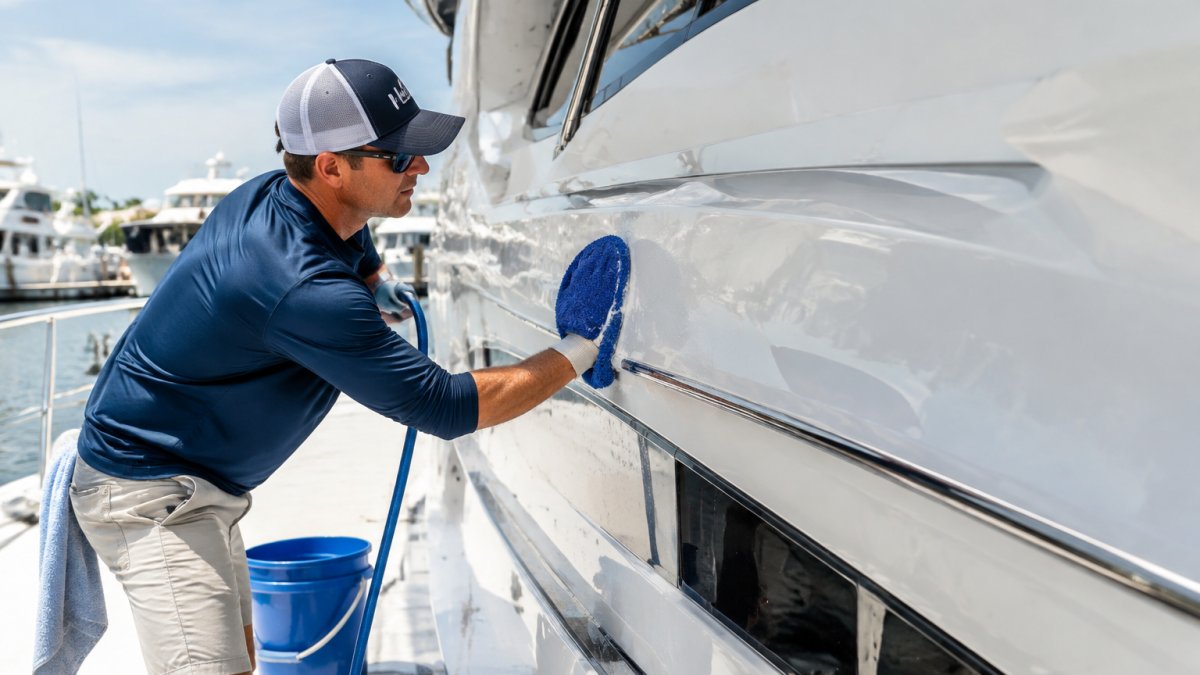
Professional marine detailing for yachts is a full restoration and protection service, not a long wash. It covers every exterior surface from bow to stern: hull, deck, non-skid, stainless steel, teak, canvas, and marine vinyl.
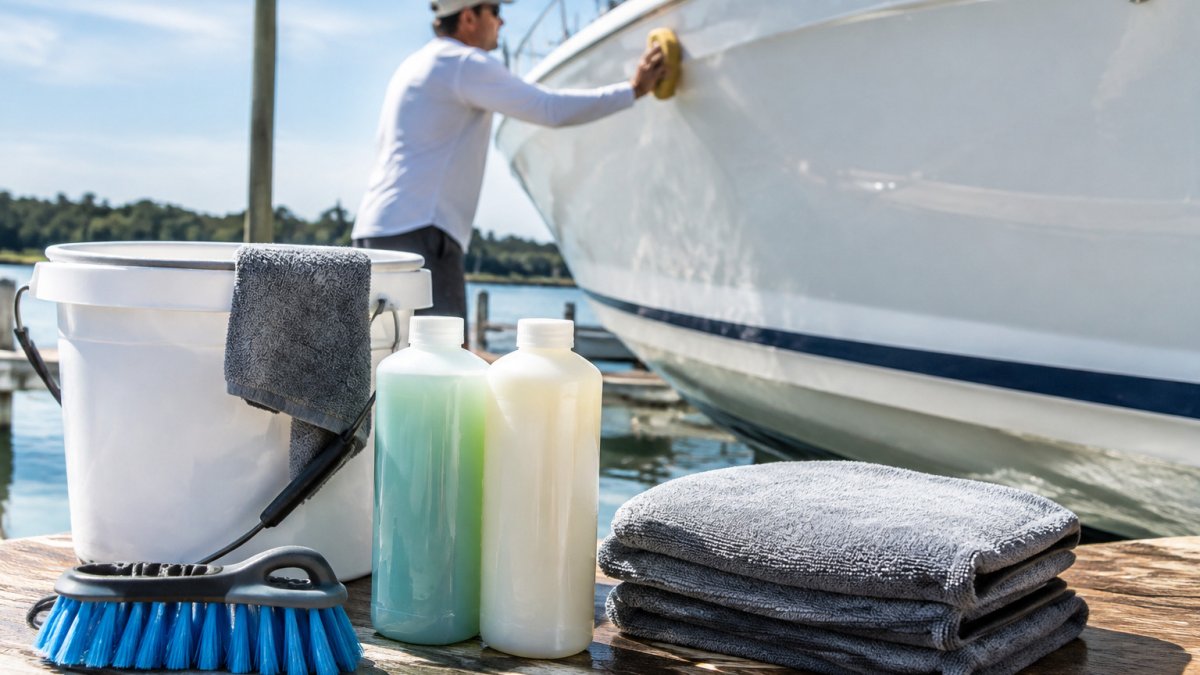
The gap between a wash and true marine detailing shows up in the details. A wash removes loose dirt. Detailing removes the bonded layer: water spots, algae film at the waterline, rust bleed from stainless fittings, and the chalky oxidation that UV leaves behind.
Deck-to-Cabin Service Scope
A complete yacht detailing service moves in a fixed order, and the order matters as much as the products. Work generally runs from the hull and waterline up through the deck, brightwork, cabin, and canvas and teak.
Skipping a step costs you later. Wax over a dirty surface traps grit, and grit under a buffer is how swirl marks appear.
Boat Detailing and Waxing: What Separates a Wash From Real Protection
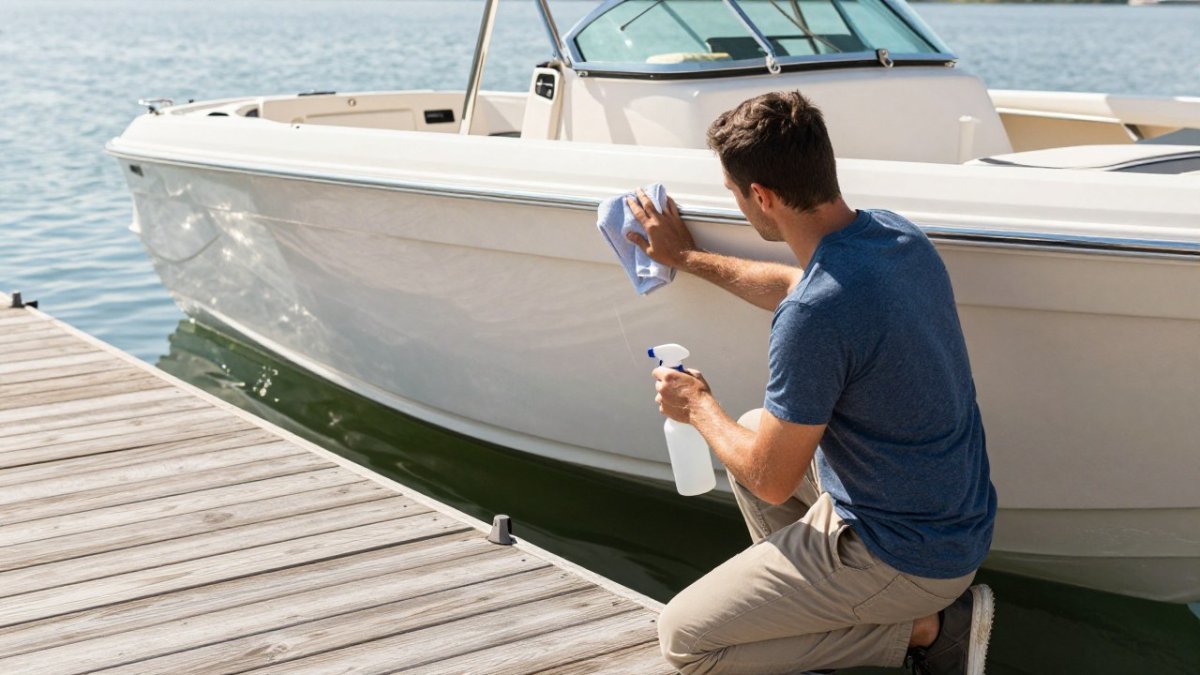
Boat detailing and waxing is the difference between looking clean this weekend and staying protected for months. Wax and sealant form a sacrificial layer that takes the UV and salt hit instead of your gelcoat.
A thin, even coat worked into the surface protects well, while a thick coat slopped on and wiped off does not. If you want the UV and saltwater protection described here applied at your dock, you can see the boat waxing service that covers it.
Watch out: waxing over oxidation seals in the chalk. The finish looks better for a week, then fails. Strip and correct first, protect second.
Boat Oxidation Removal: Restoring Faded Gelcoat and Fiberglass
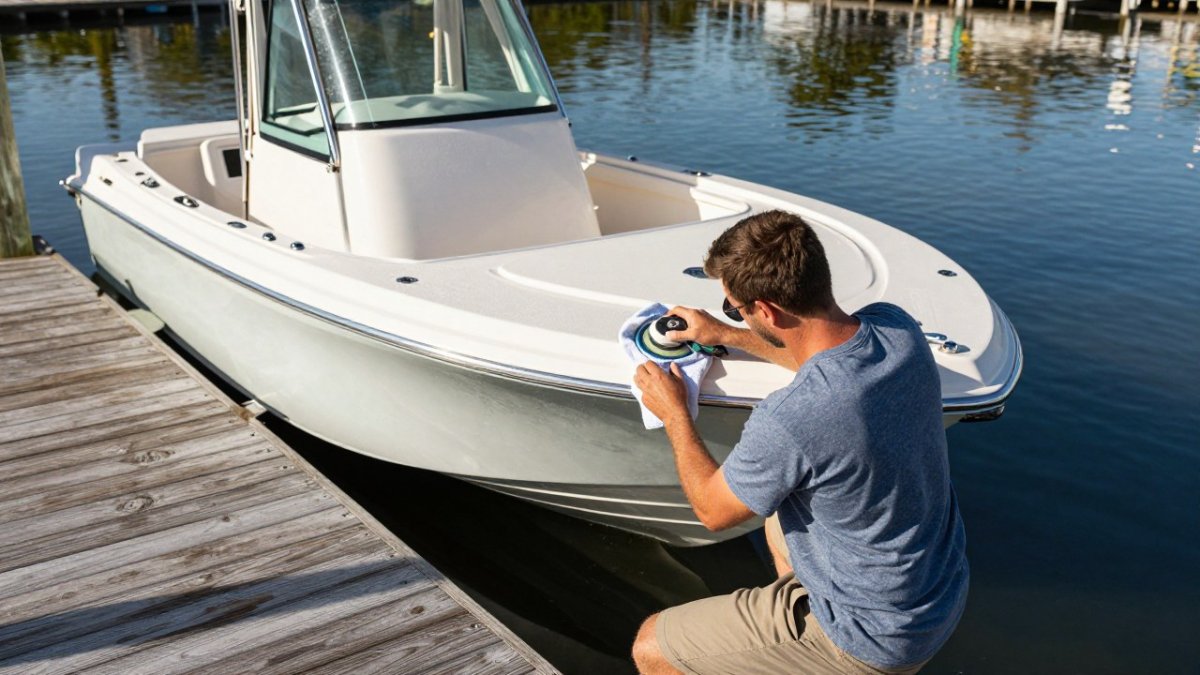
Oxidation removal generally follows a compound, polish, then protect sequence. Oxidation is the chalky, faded layer on fiberglass and gelcoat caused by sun and salt exposure.
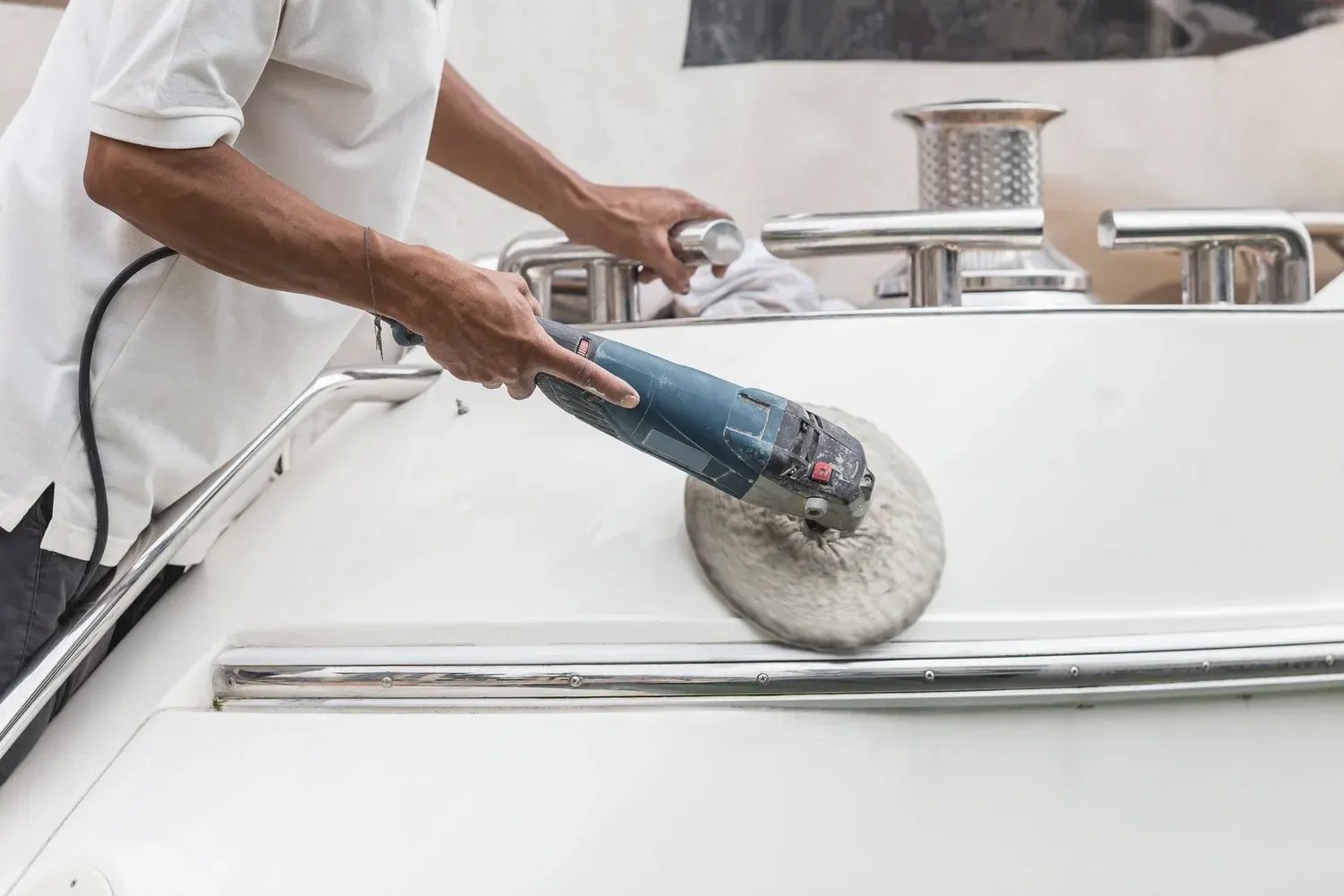
Compounding cuts the dead layer back with an abrasive. Polishing refines the surface the compound left behind. Protection locks the result in.
Compound, Polish, Then Protect
A few practical rules keep this stage from going wrong:
- Always run a test spot on an inconspicuous area before touching the whole hull
- Match the pad to the product. A rotary polisher with the wrong backing plate burns gelcoat fast
- Keep the buffer moving. Heat, not pressure, is what damages a finish
- Work in shade. Compound dries too quickly in direct sun
Light oxidation often responds to a hand-applied polish. Heavy, chalky oxidation needs a full compounding pass, which is a job for a professional detailer with the right machine and pad combination. If your hull has crossed that line, full compounding service is the step that brings the gelcoat back.
Teak and Canvas Boat Care: The Surfaces That Age Fastest
Teak and canvas boat care is where neglect shows first. Teak left alone turns gray and lifts grain. Canvas left alone mildews at the seams and loses its water repellency.
Teak needs a two-part routine: a dedicated teak cleaner to pull out the gray, then oil to seal and feed the wood. For weathered teak on your boat, teak cleaning and oiling covers the brightening and sealing step.
Yacht Detailing Services: How to Judge a Provider Before You Book
Yacht detailing services vary widely in scope, and the quote rarely tells you which one you are getting. Two quotes for the same 45-foot motor yacht can differ by thousands of dollars because one includes compounding and the other is a wash-and-wax pass.
A quote that holds up under scrutiny usually separates the work into correction and protection. Correction means washing, decontaminating, compounding, and polishing. Protection means sealant, wax, teak oil, and vinyl dressing.
What to Verify Before You Book
Judge a provider on evidence, not adjectives. These are the checks that separate a professional operation from a crew with a buffer and a truck:
- Insurance and liability coverage. Ask for a certificate of insurance naming general liability, and confirm it covers work performed at your dock or in the marina.
- Surface-specific experience. Ask how they treat painted hulls versus gelcoat, and how they handle clear-coated or wrapped surfaces. A crew that only knows gelcoat can burn through paint or wrap with the wrong pad and speed.
- Product disclosure. A professional can name the compound, polish, and sealant lines they use and explain why. If the answer is "marine-grade products," they are guessing.
- Method for brightwork and vinyl. Machine-only operations cut corners on stainless and upholstery. Ask whether polishing and vinyl care are hand-applied.
- Written scope and completion checklist. The best providers hand you a surface-by-surface list of what was done. That list is your baseline for the next service and your evidence if a problem appears later.
What Drives Cost
Pricing depends on length, surface condition, and how much correction the hull needs.
Ask for the breakdown in terms of labor, product, and correction so you can see what each line item covers.
Watch out: a quote that is dramatically lower than the others usually means skipped correction, diluted products, or no insurance. Compare scope line by line before you compare the total.
Quality Checks and Guarantees
Inspect the finished work in daylight, not under marina floodlights. Check the waterline for remaining algae film, run a hand over the hull to feel for compound residue, look at stainless for swirl marks, and confirm teak is dry and evenly oiled rather than slick. Ask what the provider's guarantee covers, typically workmanship for a set period, and get it in writing.
Building a Maintenance Schedule and Booking Dockside Service
A maintenance schedule beats a single deep clean every time. Boats that get recurring care generally hold their finish and resale value better than boats that are only serviced occasionally. Salt and UV work continuously, so the response should be continuous too.
A workable annual rhythm looks like this:
| Frequency | Service | Why It Matters |
|---|---|---|
| Every 2-4 weeks | Wash, waterline scrub, rinse | Stops salt and algae bonding |
| Quarterly | Wax or sealant refresh | Rebuilds UV protection |
| Twice a year | Teak clean and oil | Prevents graying and grain lift |
| Annually | Compound and polish as needed | Corrects light oxidation |
| Seasonally | Canvas clean and re-proof | Stops seam mildew |
Timing the Plan to the Season
The calendar matters as much as the frequency. In northern climates, the heaviest correction belongs in spring before launch, when the hull is accessible and the finish has taken a winter of exposure.
A common pattern is a spring restoration, a midseason protection refresh, and a fall teak and canvas pass before storage. Liveaboards and seasonal owners both benefit from a fixed plan.
Environmental and Marina Compliance
Detailing at the dock produces runoff, and marinas increasingly regulate it. Wash water carrying soap, compound residue, and oxidation chalk should not flow straight into the water.
Product choice matters too. Compounds and degreasers that are safe on gelcoat can still be harsh in the water. A provider who can explain which products are biodegradable and which need containment is one who has thought about compliance, not just shine.
Booking Dockside Service
Dockside service removes the haul-out, the trailer, and the transit time from the equation. To set up a recurring plan or a one-time restoration, contact Kleen All Boats and we will quote your boat, usually the same day.
When you book, confirm access to water and power, the marina's rules on outside contractors, and whether the provider carries insurance for dockside work.
Marine detailing is worth it when you compare it against what oxidation and salt cost you at resale.
Frequently Asked Questions
How much does a full yacht detail cost?
Pricing depends on yacht length, how much oxidation and staining is present, and which surfaces need work, so most providers quote after seeing the boat. A basic wash and wax costs far less than a compound-and-polish restoration with teak and canvas care. Ask for an itemized quote that lists wash, oxidation removal, wax or sealant, and interior surfaces separately so you can compare packages fairly. Kleen All Boats builds custom packages around your vessel's specific needs; contact the business directly for current pricing or a quote.
Is it better to wax or polish a boat?
They do different jobs. Polish removes light oxidation and fine scratches to bring back gloss, while wax or sealant sits on top and protects the gelcoat from UV and salt. On a faded hull, wax alone will not restore color; you need compounding and polishing first, then a protective coat. Skipping protection after polishing leaves fresh gelcoat exposed to sun damage. A proper marine detailing routine pairs both steps and repeats the protective layer every few months.
Can mobile marine detailers work at a dock or marina?
Yes. Mobile crews bring water, products, and equipment to your slip, lift, or marina and work dockside, which avoids hauling the boat or losing a weekend. Confirm the marina allows outside vendors and check that the crew uses eco-friendly products and contains runoff where required. Ask how they protect nearby boats and clean up afterward. Kleen All Boats is a family-owned mobile detailing service that has operated since 2004.
How often should a yacht be professionally detailed?
Boats kept in salt water and strong sun typically need a wash every two to four weeks, with wax or sealant renewed every three to four months and a full compound and polish once or twice a year as oxidation appears. Seasonal owners often book a deep clean before storage and a restoration before the season starts. A recurring schedule costs less over time than occasional restorations because gelcoat damage is caught early.