 blog
Eco Friendly Boat Wash Products That Protect Your Gelcoat
Last Updated: November 8, 2026
Quick Summary
A boat wash is genuinely eco-friendly when its surfactants break down quickly in water, its dilution ratio keeps active chemistry low, and it contains no chlorine, phosphates, or solvents that harm aquatic life. A biodegradable concentrate used at the label's dilution, applied with a soft brush and rinsed before it dries, is a sound approach for routine gelcoat care.
- Marine-safe is not a regulated term, so check for readily biodegradable with a stated test standard.
- Choose phosphate-free, chlorine-free products with a pH near neutral and no petroleum distillates.
- Wash saltwater boats after every outing and rinse hardware with fresh water to loosen salt first.
- Use a bucket and soft brush instead of a running hose to reduce soap runoff.
- Dish soap mixes strip wax over time, so treat homemade wash as a stopgap only.
Table of Contents
- What Makes a Boat Wash Truly Eco-Friendly
- The Best Eco Friendly Boat Wash Products for Gelcoat and Hulls
- Star brite Sea Safe Boat Wash: What It Does Well and Where It Falls Short
- Choosing the Best Boat Soap for Saltwater and Freshwater Use
- Homemade Boat Wash: When a DIY Mix Works and When It Doesn't
- Booking an Eco-Friendly Wash at Your Dock or Marina
- Frequently Asked Questions
What Makes a Boat Wash Truly Eco-Friendly
A boat wash is genuinely eco-friendly when its surfactants break down quickly in water, its dilution ratio keeps active chemistry low, and the product carries no chlorine, phosphates, or solvents that harm aquatic life. Everything else on the label is marketing. The products that pass that test are a short list.
The stakes are simple. Whatever runs off your hull ends up in the water your kids swim in and the seagrass your fishery depends on.
Biodegradability, Surfactants, and Aquatic Toxicity
Biodegradability is how quickly a cleaning agent breaks down into harmless compounds once it reaches the water. Some boat soaps claim "readily biodegradable," meaning microbes digest them within days under test conditions.
Surfactants do the actual cleaning, lifting dirt and oil from gelcoat so water carries it away. The problem is that some surfactants are more toxic to fish and shellfish than others. Non-ionic and plant-derived surfactants generally break down faster than heavy solvent-based formulas.
Aquatic toxicity is measured on fish, algae, and invertebrate species. A product can be biodegradable and still show moderate toxicity at full strength, which is why dilution matters as much as the formula.
Reading a Marine-Safe Label Without the Marketing Spin
"Marine-safe" is not a regulated term. Any brand can print it. Here is what to check instead:
- "Readily biodegradable" with a stated test standard, not just the word "biodegradable"
- Phosphate-free and chlorine-free on the ingredient panel
- pH near neutral, since strong alkaline cleaners strip wax and irritate skin
- A stated dilution ratio, which tells you the maker expects concentrated use
- No petroleum distillates or solvents listed among the ingredients
Watch out: a bottle can say "eco-friendly" in large green letters and still list solvents in the fine print. Flip it over before you buy.
The Best Eco Friendly Boat Wash Products for Gelcoat and Hulls
The best eco friendly boat wash products for gelcoat balance three things: they lift salt and grime without stripping wax, they rinse clean, and their surfactants break down in water. Concentration matters too, since a gallon of concentrate can outlast several bottles of ready-to-use wash.
Here is how the leading options compare on the factors that decide a purchase:
| Product | Format | Best For | Watch Out For |
|---|---|---|---|
| Star brite Sea Safe Boat Wash | Concentrate | Weekly maintenance washes | Needs accurate dilution |
| General-purpose marine soaps | Ready-to-use or concentrate | Light salt and dust | Varies widely by brand |
| Biodegradable hull cleaners | Concentrate | Heavier grime | Can strip wax if overused |
| DIY dish soap mixes | Household | Emergency rinses | Strips wax over time |
A biodegradable concentrate used at the label's dilution, applied with a soft brush and rinsed before it dries, is a sound approach for routine gelcoat care.
Star brite Sea Safe Boat Wash: What It Does Well and Where It Falls Short
If your hull has years of oxidation or a brown waterline, a standard eco-friendly wash may not remove it. Those marks often need a dedicated stain remover or a light compound, and professional boat stain removal in Port Charlotte, FL can address them.
Choosing the Best Boat Soap for Saltwater and Freshwater Use
The best boat soap for saltwater is a concentrated, biodegradable formula that cuts dried salt without stripping wax, while freshwater boats usually need a milder wash because the grime is lighter. Salt is the bigger enemy. It dries into a film that pulls moisture from gelcoat and accelerates oxidation. But the waterway you boat in also changes how you should apply and contain the wash, and most product guides skip that part.
Saltwater Selection and Use
For saltwater boats, wash after every outing when you can, and pay attention to metal fittings, rails, and the lower unit where salt collects. A concentrate mixed slightly stronger handles dried salt film better than a ready-to-use spray. Rinsing the hull and hardware with fresh water before washing can help loosen salt, which may let you use less soap. A common pattern is that boaters apply soap directly to a salt-crusted hull, which uses more product and pushes more chemistry into the water.
Washing a saltwater boat at a slip without containing runoff can send soap and salt into the marina basin, and some marinas restrict on-water washing. Check with the dockmaster before you wash in the water.
Freshwater Selection and Use
Freshwater boats often deal with algae, lake scum, and dust rather than heavy salt. A mild biodegradable soap at standard dilution may be sufficient. Lakes and rivers can have runoff rules, so using a bucket rather than a hose-fed sprayer and capturing wash water where local rules require it is worth doing.
A product that is safe for one setting may not be appropriate in the other. A stronger salt-cutting concentrate is overkill in a freshwater lake, and a mild lake soap may not cut dried salt on a coastal hull. Match the dilution to the waterway, not just to the label.
Application Methods That Reduce Runoff
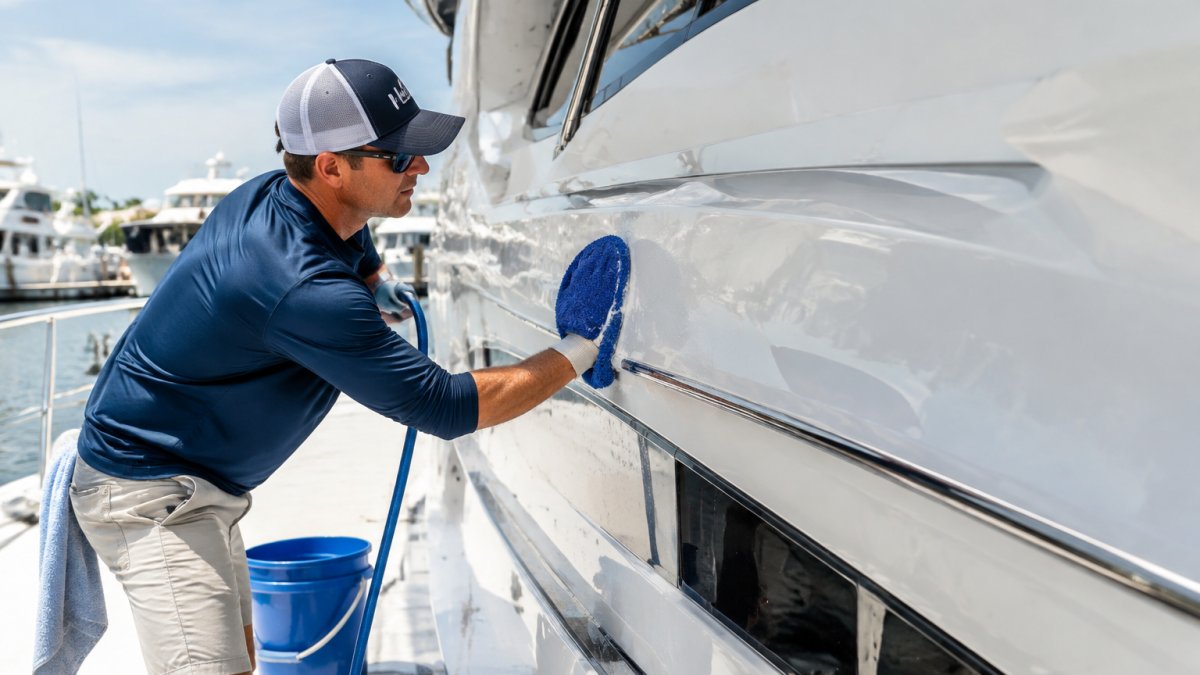
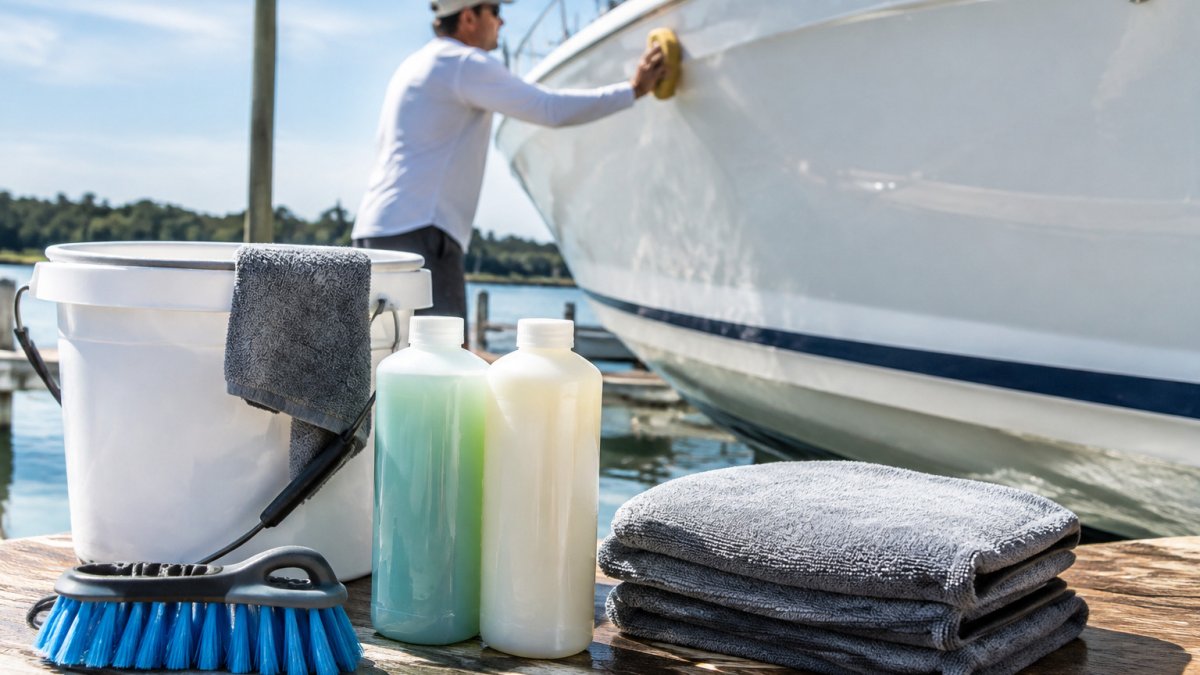
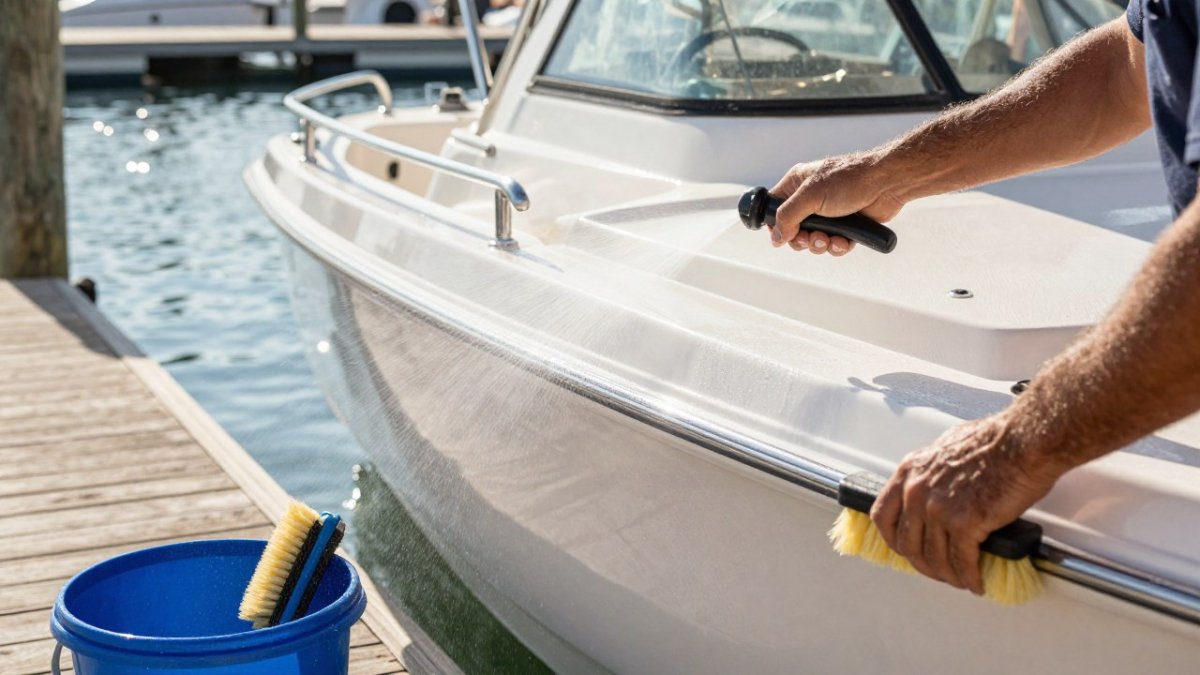
Runoff control matters as much as the formula. Use a bucket and a soft brush instead of a running hose, mix only the amount you need, and work from the top down so dirty water runs off before you rinse. Where local rules require it, capture wash water with a tarp or containment mat under the hull. These steps can reduce the volume of soap that reaches the water.
Homemade Boat Wash: When a DIY Mix Works and When It Doesn't
A homemade boat wash works for a quick rinse after a light outing, but it is a poor long-term choice for gelcoat. The common dish soap and water mix cuts grease well because it is a degreaser by design, and that same quality slowly strips the wax layer protecting your hull.
A gentler DIY option is a small amount of mild castile soap in a bucket of water, used sparingly and rinsed thoroughly.
Where DIY fails:
- It cannot remove set-in waterline or rust stains
- It offers no UV protection
- Repeated dish soap use dulls gelcoat over a season
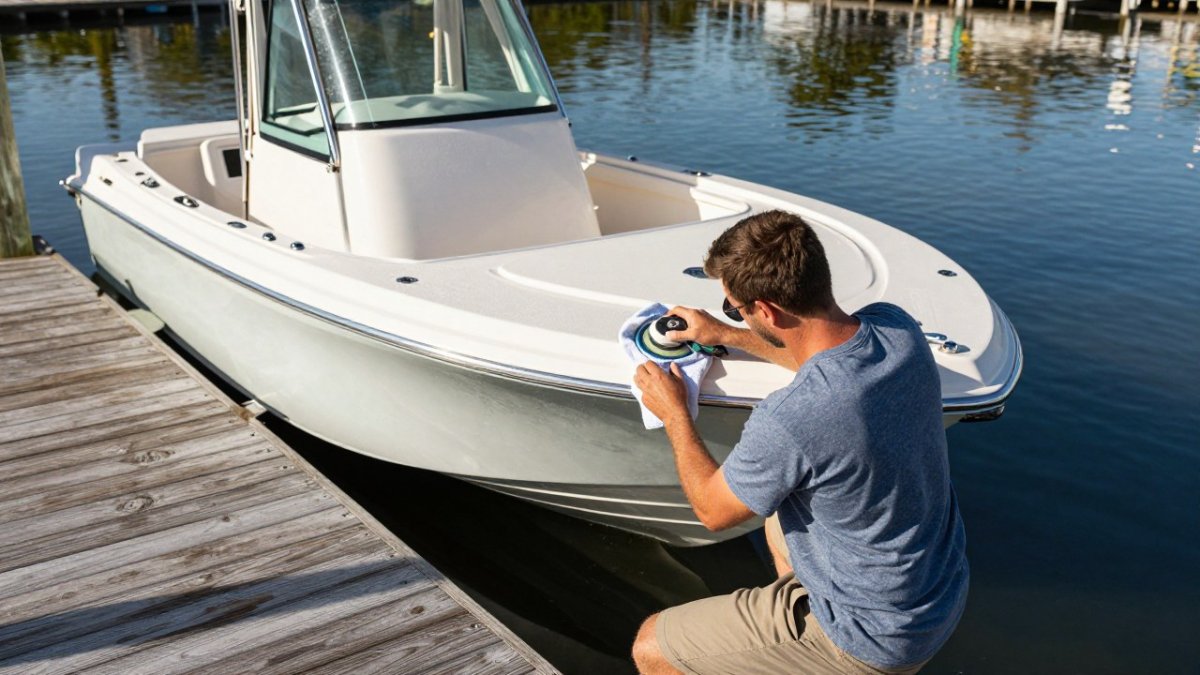
If you want protection after washing, a boat waxing service in Port Charlotte, FL can apply a UV and salt barrier to the gelcoat. Use homemade wash as a stopgap, not a routine.
Booking an Eco-Friendly Wash at Your Dock or Marina
Booking an eco-friendly wash at your dock or marina means scheduling a mobile crew who bring biodegradable products, control their runoff, and rinse thoroughly, so you never haul the boat or drive to a shop. For boat owners in this region, that convenience matters as much as the chemistry.
At Kleen All Boats, we use eco-friendly washing and detailing products, and we are a family owned and operated business that has served customers since 2004. We build custom packages around your boat's needs.
If you want the full package, you can book yacht cleaning in Port Charlotte, FL for larger vessels, or arrange mobile boat detailing in Port Charlotte, FL for a full interior and exterior job at your slip. For current pricing or a quote, contact Kleen All Boats.
Ask any crew how they wash before you book them, especially around gelcoat.
The gap between an eco-friendly wash and a damaging one usually comes down to product choice and technique, not effort. If you want biodegradable products, careful hand application, and a crew that knows how Florida sun and salt treat gelcoat, Kleen All Boats brings all three to your dock, with mobile service, eco-friendly products, and custom packages built around your vessel. Get started with Kleen All Boats and keep your gelcoat protected without hauling your boat.
Frequently Asked Questions
What is the best thing to wash a boat with?
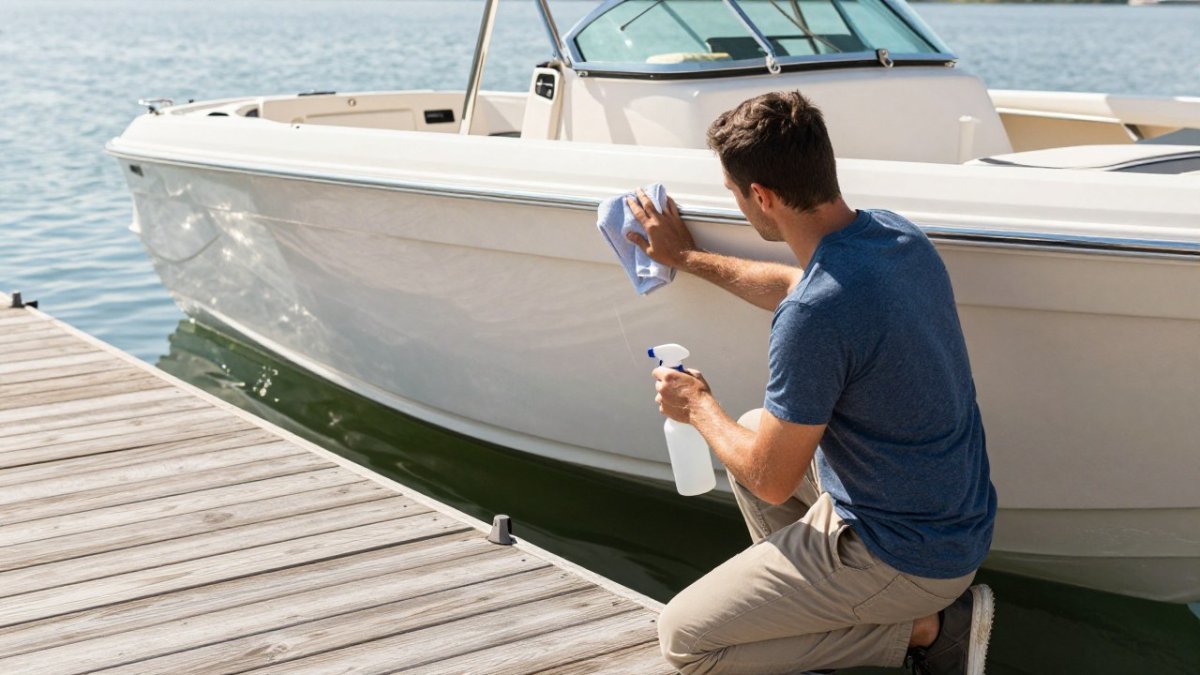
A pH-neutral, biodegradable boat wash mixed at the dilution ratio on the label is the safest starting point for gelcoat. Avoid dish soap, which strips wax and can be harsh on aquatic life, and avoid abrasive pads on glossy surfaces. For saltwater boats, rinse with fresh water first to lift salt residue, then apply the wash with a soft mitt, working top to bottom so dirt and grime don't get dragged across the hull.
Is Dawn good for washing boats?
Dawn cuts grease well, but it is not a good regular boat wash. It strips wax from gelcoat, leaving the surface more exposed to UV damage and salt corrosion, and A dedicated biodegradable boat soap is designed to clean without removing your protective coat.
Which boat wash soap is best for saltwater?
Look for a concentrated, biodegradable boat soap labeled for saltwater use, ideally one that lifts salt residue without stripping wax. Rinse the hull with fresh water before washing to dissolve dried salt, then use a soft wash mitt and a two-bucket method to keep grit off the gelcoat.
Are biodegradable boat cleaners safe for lakes and marinas?
Biodegradable is a good sign, but it is not a free pass to discharge wash water anywhere. Many marinas and freshwater lakes have runoff and discharge rules, and even eco-friendly cleaners can carry dirt, oil, and contaminants into the water. Wash on a grassy or gravel area away from the water when possible, use the minimum dilution that cleans effectively, and check local marina guidance before letting wash water flow into the waterway.