 Ultimate guide
Boat Detailing for Resale Value: What Pays Off Before a Sale
Last Updated: November 7, 2026
Quick Summary
Boat detailing before a sale pays off by removing the visual flaws buyers notice first, such as faded gelcoat, stained upholstery, and corroded fittings. It cannot fix mechanical or structural problems, but it reduces haggling and supports the asking price. Prioritize exterior washing, interior cleaning, and metal fittings first.
- Buyers judge a boat within minutes, so gelcoat shine, clean upholstery, and a stain-free deck matter most.
- Detailing cannot fix engine failures, hull blisters, delamination, or electrical faults, which surface in a survey.
- Compounding removes oxidation, polishing refines gloss, buffing adds clarity, and waxing protects the finish.
- Spend budget in tier order: exterior wash, interior deep clean, and metal fittings before finish work.
- Schedule the full detail within a week or two of listing so the boat does not weather before showings.
Table of Contents
- How Detailing Affects Boat Resale Value
- Boat Wash vs. Boat Detail: What Each Actually Does
- Exterior Cleaning, Gelcoat Oxidation, and Restoration
- Compounding, Polishing, Buffing, and Waxing
- Interior Cleaning, Upholstery, and Metal Fittings
- Boat Detailing Cost and Return by Boat Type, Age, and Condition
- Prioritized Pre-Sale Detailing Checklist
- DIY or Professional: A Condition-Based Decision Guide
- What Detailing Cannot Fix and Records to Keep
- Scheduling Your Detail Before You List
- Frequently Asked Questions
How Detailing Affects Boat Resale Value
A clean, well-maintained boat sells faster and closer to asking price, and proper boat detailing is one of the most reliable ways to get there. Buyers judge a vessel within minutes of stepping aboard, and the first impression usually comes from gelcoat shine, clean upholstery, and a deck free of stains. Detailing for resale value means focusing on the work buyers actually see and touch before they make an offer.
That said, detailing will not turn a neglected boat into a premium one. Its job is to remove the visual objections that push buyers to haggle. Kleen All Boats, a family-owned mobile detailing service, works with owners preparing vessels for sale.
Keep expectations realistic. Detailing is a cosmetic and maintenance investment, not a structural repair. Buyers still order surveys, and a clean boat with a failing engine will not stay clean in the survey report.
Boat Wash vs. Boat Detail: What Each Actually Does
A boat wash removes surface dirt, salt, and grime using soap and water. It keeps the vessel presentable between trips, but it does not restore the finish. A full detail goes further, addressing oxidation, stains, and protective layers that a wash leaves untouched.
The practical difference shows up when you prepare a boat for sale. A wash makes the hull look clean in daylight. A detail makes it look restored, with deeper gloss and cleaner interior surfaces that hold up under a buyer's close inspection.
Most owners need both at different points. Wash regularly to prevent buildup, and schedule a full detail before listing. Other providers offer these services under various names, so compare exactly what is included rather than relying on package labels.
Exterior Cleaning, Gelcoat Oxidation, and Restoration
Gelcoat is the glossy outer layer of a fiberglass hull, and it takes the worst of Florida's UV exposure and salt air. Over time it fades, chalks, and develops oxidation that looks like a dull, powdery haze. Buyers notice this immediately, and it signals neglect even when the boat is mechanically sound.
Start with a thorough exterior wash to remove salt deposits, algae, and waterline stains. Oxidation sits underneath that grime, so cleaning alone will not restore the finish. Restoration typically requires compounding to cut through the oxidized layer, followed by polishing to refine the surface.
Watch out: aggressive compounding on thin or already-damaged gelcoat can wear through the surface. Test a small area first and stop if the finish looks like it is thinning.
Compounding, Polishing, Buffing, and Waxing
These four steps work in sequence, and skipping one usually shows in the final finish. Compounding removes oxidation and light scratches. Polishing refines the surface to restore gloss. Buffing applies even pressure to bring out clarity, and waxing adds a protective layer that helps resist UV and salt.
Wax is the step most owners underestimate. A properly applied coat protects gelcoat between details and gives the hull a uniform shine buyers associate with good maintenance. Hand application lets the technician control coverage on curves, transoms, and areas where wax tends to build up.
Pricing for compounding and polishing depends on quantity, dates, and the condition of the vessel. Contact Kleen All Boats directly for current pricing or a quote.
Kleen All Boats offers full compounding and waxing services at your dock to protect and restore gelcoat.
Interior Cleaning, Upholstery, and Metal Fittings
Buyers open every hatch, press every cushion, and check every fitting. Interior condition often decides whether a buyer trusts the rest of the boat. Mildew on seat cushions, stained carpets, and corroded hardware all signal deferred maintenance.
Start with a thorough interior clean of cabins, cockpit seating, and storage areas. Vinyl upholstery responds well to deep cleaning, and teak decking benefits from cleaning and oiling.
Metal fittings, including cleats, rails, and hinges, should be inspected for corrosion and cleaned to remove salt buildup.
Kleen All Boats offers vinyl cleaning, teak cleaning and oiling, and canvas waterproofing as part of its service range.
Boat Detailing Cost and Return by Boat Type, Age, and Condition
Detailing costs vary with the amount of work required, so no single figure applies to every vessel. Request a quote from Kleen All Boats for your specific vessel.
The return on detailing depends on condition. A boat with heavy oxidation and dingy upholstery gains more from restoration than one already in good shape.
Be cautious about precise promises of return. Resale outcomes depend on market conditions, location, engine condition, and buyer demand. Detailing improves presentation and reduces objections, which supports the asking price, but it cannot guarantee a specific dollar increase.
Instead of chasing a percentage, estimate your likely return with a simple framework. First, get a written quote for the work you are considering. Second, list the visible defects a buyer would flag in the first five minutes: chalky gelcoat, stained vinyl, corroded cleats, gray teak, mildewed canvas. Third, rank those defects by how much they would cost a buyer to fix or how much they would likely discount the offer. Fourth, compare that ranked list to the quote. If the detail addresses the top two or three objections for less than the discount a buyer would demand, the math favors detailing before listing.
Boat type changes the priority list more than the total cost. Painted hulls and topsides need gentler products and less aggressive polishing to avoid dulling or burning the paint. Aluminum hulls and pontoons show oxidation and waterline staining differently, and bare aluminum requires compatible cleaners to avoid staining or pitting. Older vessels usually benefit most from interior deep cleaning and metal fitting treatment, because buyers expect some exterior wear but react strongly to mildew and corrosion.
A common pattern is that sellers overspend on exterior restoration when the interior is the bigger objection, or the reverse. Walk the boat as a buyer would, starting at the dock and ending in the cabin, and let that walk set your budget. Request a quote from Kleen All Boats for your vessel and condition so you can compare the cost against the objections you found.
Prioritized Pre-Sale Detailing Checklist
Work in order of visibility and buyer impact, and budget your time and money against what a buyer sees first. The sequence below is organized by visible impact, not by service category, so you can stop when your budget or timeline runs out and still cover the highest-value items.
Tier 1: The first five minutes (highest impact, lowest cost)
- Exterior wash and waterline cleaning: Remove salt, algae, and stains. This is the cheapest step and the one buyers notice from the dock.
- Interior deep clean: Address cabins, seating, and storage areas. Mildew and odors read as neglect faster than faded gelcoat.
- Metal fittings: Clean and treat corrosion on cleats, rails, and hardware. Pitted fittings suggest deferred maintenance.
Tier 2: The close inspection (moderate cost, high impact)
- Gelcoat assessment: Identify oxidation and decide whether compounding is needed. Test a small area before committing to a full pass.
- Compounding and polishing: Restore gloss on faded areas. This is the step most likely to require professional judgment.
- Upholstery and vinyl care: Clean and protect seats and cushions. Cracking and staining are common negotiation points.
Tier 3: The detail-oriented buyer (lower impact, finish work)
- Waxing: Apply protection across the full hull and deck after polishing.
- Teak and wood surfaces: Clean and oil where applicable.
- Canvas and enclosures: Restore water repellency and check for wear.
Photograph the boat after each stage. Those photos double as listing images and as proof of the work performed.
Watch out: do not start with compounding on a boat that has not been washed, because grit trapped in the pad can mar the gelcoat. Wash first, assess second, and polish only the areas that need it.
If your budget is limited, spend it in Tier 1 order and stop before Tier 3. A clean interior and bright metal fittings often move a buyer more than a mirror-finish hull, because buyers expect some exterior wear on a used boat but react strongly to signs of neglect inside. If your timeline is tight, schedule the Tier 1 work within a week of photographing the boat and defer Tier 2 and Tier 3 until after the first showing if the boat is otherwise presentable.
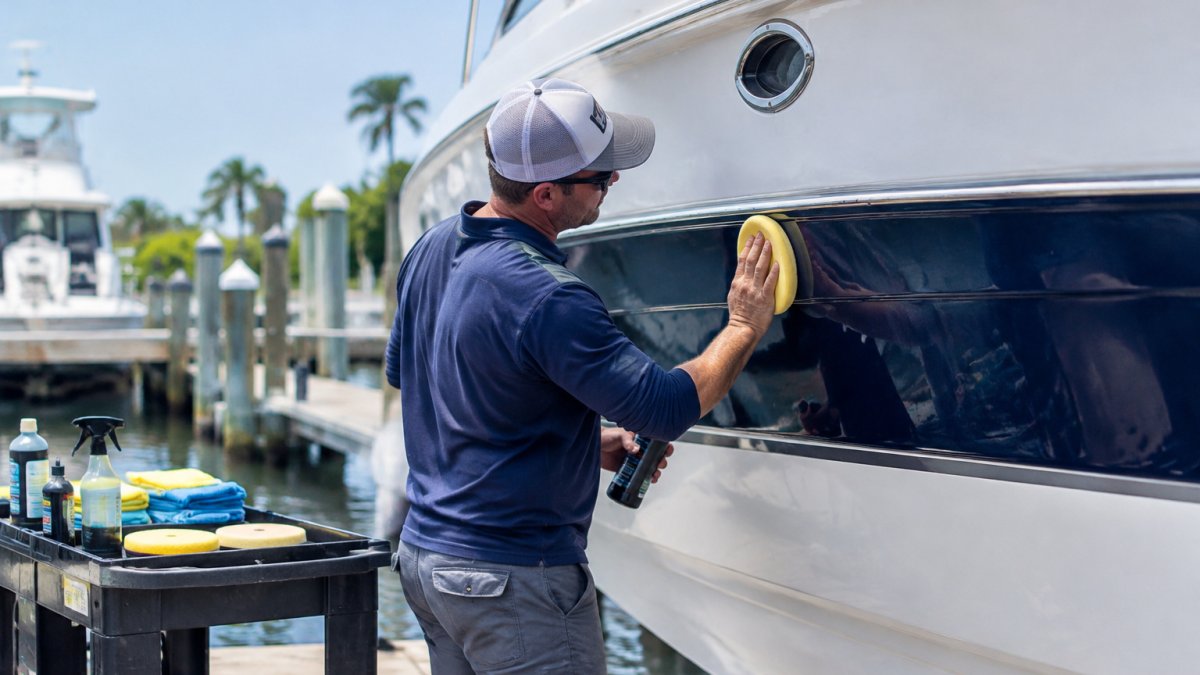
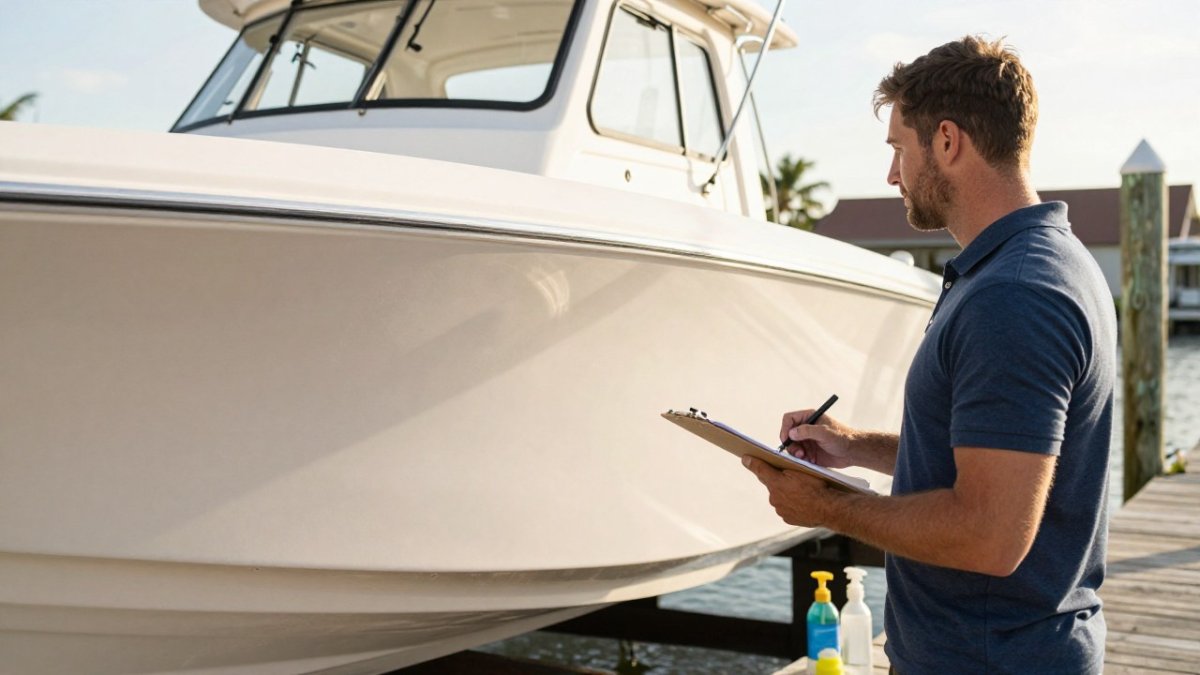
!Boat owner and detailer inspecting a white fiberglass hull at a Florida dock in late afternoon light
The checklist is organized by visible impact, so you can cover the highest-value items first.
| Tier | Steps | Why it matters |
|---|---|---|
| Tier 1: First five minutes | Exterior wash, interior deep clean, metal fittings | Cheapest steps, noticed first by buyers |
| Tier 2: Close inspection | Gelcoat assessment, compounding and polishing, upholstery care | Moderate cost, high impact on close inspection |
| Tier 3: Detail-oriented buyer | Waxing, teak and wood, canvas and enclosures | Lower impact, finish work |
DIY or Professional: A Condition-Based Decision Guide
Choose DIY for routine maintenance on a boat in good condition. Washing, light waxing, and basic interior cleaning are manageable with the right products and a few hours of work.
Choose a professional when the boat shows heavy oxidation, deep scratches, mold in upholstery, or corroded fittings. Compounding requires experience to avoid thinning the gelcoat, and professionals can judge when to stop.
A common mistake is attempting full compounding on a boat that needs only a wash, or the reverse, paying for restoration on a vessel that only needs upkeep. Match the service to the actual condition, not to the number of hours you want to spend.
Kleen All Boats offers mobile service at your dock, lift, or marina, so you don't need to haul your boat to a shop. Reach out at (941) 356-7769 for current details.
What Detailing Cannot Fix and Records to Keep
Detailing cannot repair engine failures, hull blisters that penetrate the laminate, delamination, soft spots in the deck, or electrical faults. These issues require mechanical or structural work and will surface in a buyer's survey regardless of how polished the boat looks.
Keep maintenance records that show the vessel's care history. Save receipts for detailing, service dates, and any repairs performed. Buyers trust documented maintenance, and a clear paper trail supports the condition claims in your listing.
Be honest in your listing. A detailed boat with disclosed issues sells more reliably than one whose condition surprises the buyer during survey.
Scheduling Your Detail Before You List
Time the detail so the boat looks its best on listing day, but not so early that it weathers again before the first showing. Schedule the full detail within a week or two of photographing the boat and posting the listing.
Plan around the season. Florida's sun and salt accelerate weathering, so a detail done months before a sale can lose much of its effect. Book the appointment close to when you plan to show the boat.
Coordinate with your broker or a private buyer so the vessel stays clean between showings. A quick wash before each viewing preserves the impression the detail created.
For dockside service, contact Kleen All Boats at (941) 356-7769 to schedule around your timeline. Pricing depends on boat size, condition, and the services you need, so request a quote for your vessel before booking.
Frequently Asked Questions
What is the going rate for boat detailing?
Boat detailing pricing depends on boat length, the level of service, the condition of the gelcoat and interior, and how often the boat needs care. Kleen All Boats does not publish a standard rate, because each package is built around the specific boat. For current pricing or a quote tailored to your vessel, contact Kleen All Boats directly at (941) 356-7769 or through the website. Comparing quotes is easier when each one lists exactly which services are included.
How much does boat detailing cost before selling?
The cost of detailing before a sale depends on whether the boat needs a basic wash, a full detail, or restoration work such as compounding oxidized gelcoat. A boat in good condition usually needs less work than one with heavy oxidation, staining, or interior mildew. Kleen All Boats can assess your boat and build a custom package around your specific needs. Request a quote before listing so the price reflects your actual needs.
How much does it cost to buff a 20-foot boat?
Buffing cost for a 20-foot boat depends on the condition of the gelcoat, how much compounding is needed before polishing, and whether the work is done at the dock or elsewhere. Kleen All Boats does not publish a per-foot rate. Heavily oxidized gelcoat takes longer to restore than a surface that only needs polishing. For a quote specific to your boat's size and finish, call (941) 356-7769.
Does professional boat detailing increase a boat's resale value?
Detailing can improve how a boat looks to buyers, which affects their first impression and how well the listing photos present. It does not guarantee a higher sale price, and no detail can repair structural damage or a poorly maintained engine. The clearest value comes from restoring faded gelcoat, removing stains and mildew, and presenting clean interior surfaces. Keeping records of past service also helps buyers trust the boat's condition.
Should I detail my boat before listing it for sale?
In most cases, a pre-sale detail is worthwhile because buyers judge a used boat heavily on appearance during inspection. Focus first on the surfaces buyers see in photos and during the walkthrough: hull, deck, cockpit, and cabin. Work through a prioritized checklist rather than detailing everything equally. Kleen All Boats can assess your boat and build a custom package around your specific needs.
How do I choose between a boat wash and a full detail?
A boat wash removes dirt, salt, and surface grime, which is useful for routine maintenance. A full detail goes further, adding compounding, polishing, waxing, and interior cleaning to restore appearance. If the boat has no oxidation or staining and is simply dirty, a wash may be enough. If the gelcoat is dull or the interior shows wear, a full detail is the better choice before a sale.
What do buyers look for when inspecting a used boat?
Buyers typically check gelcoat gloss, stains and water spots, the condition of upholstery and canvas, metal fittings for corrosion, and whether the interior smells of mildew. They also review maintenance records and the overall cleanliness of the boat. Addressing these visible items before listing makes a boat easier to evaluate and can shorten time on the market.
Can detailing fix faded gelcoat and oxidation on an older boat?
Compounding and polishing can significantly improve oxidized gelcoat on many older fiberglass boats, restoring much of the gloss. However, deep cracks, crazing, or damage that has penetrated below the gelcoat layer cannot be fully removed by detailing. Kleen All Boats can assess your boat's condition before any work begins.