 how-to
Preventing Gelcoat Oxidation in Florida Sun and Salt
Last Updated: November 15, 2026
Quick Summary
Preventing gelcoat oxidation in Florida comes down to a repeatable routine: rinse, wash, dry, and protect, on a schedule built around the seasons. Rinse off salt after every trip, wash with pH-neutral marine soap every two to four weeks in boating season, and apply wax or a polymer sealant as a UV barrier.
- Rinse with freshwater after every trip to remove salt before it bakes into the surface.
- Wash with pH-neutral marine soap every two to four weeks during boating season.
- Dry by hand after each wash to stop water spots and mineral stains from setting.
- Inspect the topsides monthly for dull finish, fading, or light chalking.
- Cover or shade the boat at the dock between outings.
Table of Contents
- Why Florida Sun and Salt Attack Gelcoat
- A Step-by-Step Routine for Preventing Gelcoat Oxidation
- How to Remove Oxidation from Fiberglass Boat Surfaces
- Frequently Asked Questions
Why Florida Sun and Salt Attack Gelcoat
Gelcoat oxidation is the gradual breakdown of a boat's outer resin layer, and Florida's climate makes it happen faster than almost anywhere else. The combination of intense ultraviolet rays, saltwater, heat, and year-round weathering strips the surface of its protective oils. The result is a dull finish, a faded surface, and the chalky appearance that signals oxidized gelcoat.
The sun does most of the damage. Salt residue and humidity finish the job.
A Step-by-Step Routine for Preventing Gelcoat Oxidation
Preventing gelcoat oxidation in Florida comes down to a repeatable routine: rinse, wash, dry, and protect, on a schedule built around the seasons. Skip a step and UV exposure gets a head start.
Here is a routine that protects gelcoat:
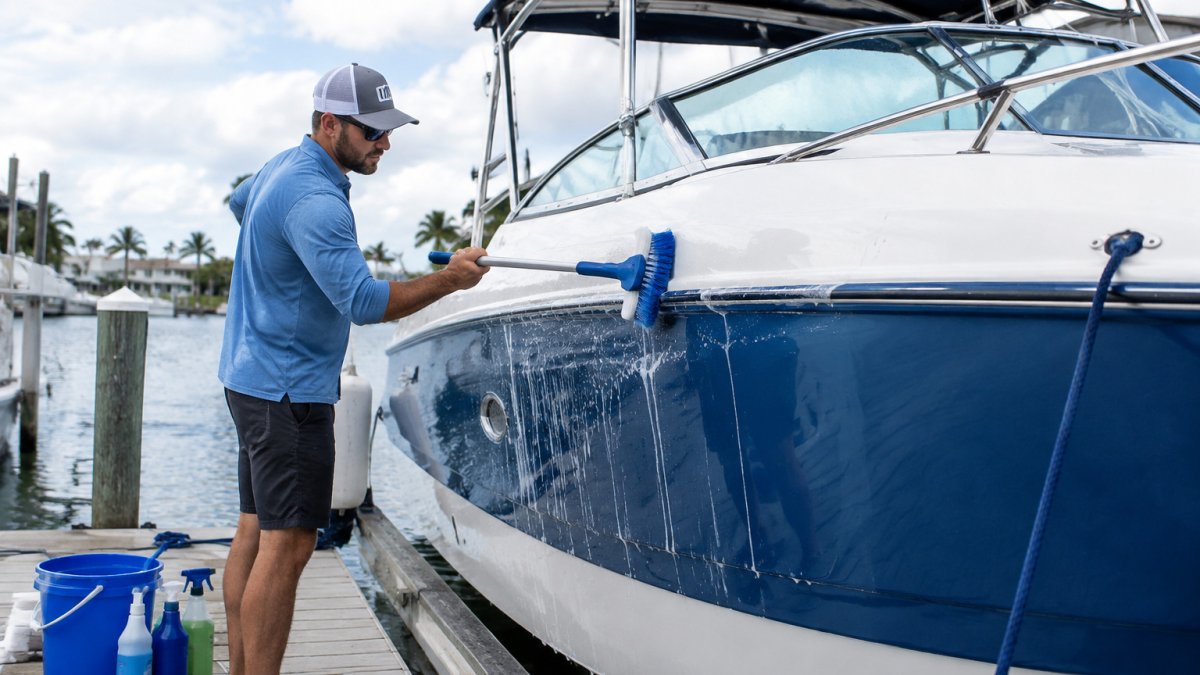
- Rinse after every trip. Freshwater rinse removes salt residue before it bakes into the surface.
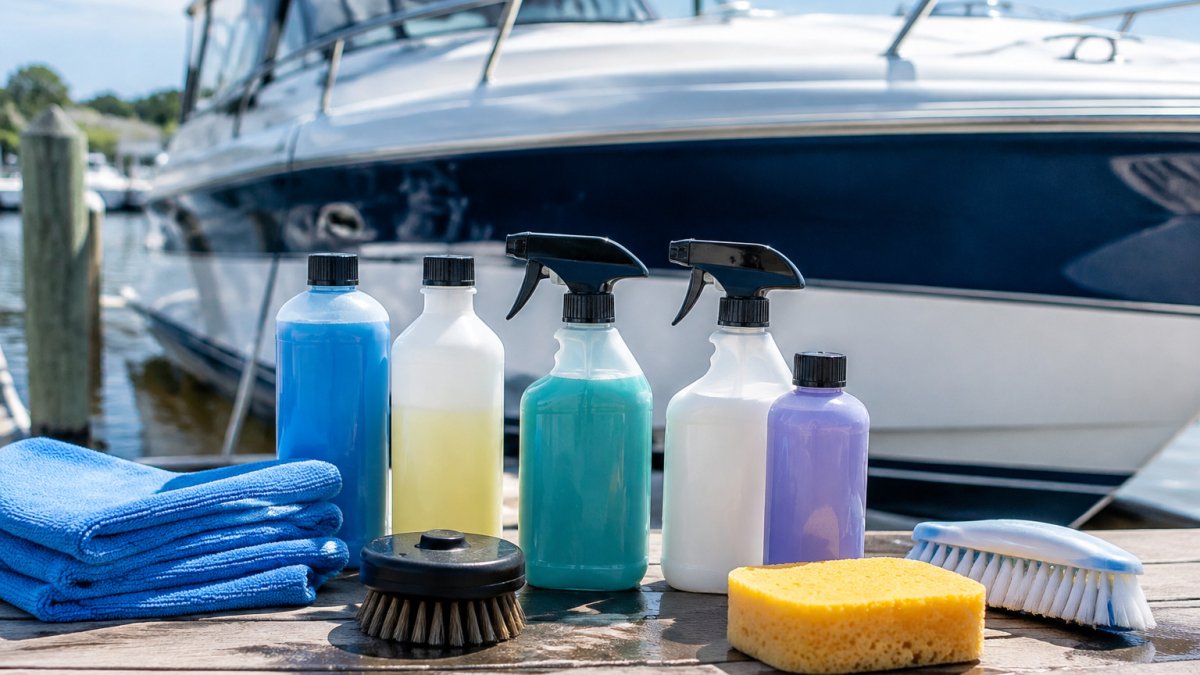
- Wash with a pH-neutral marine soap every two to four weeks during boating season.
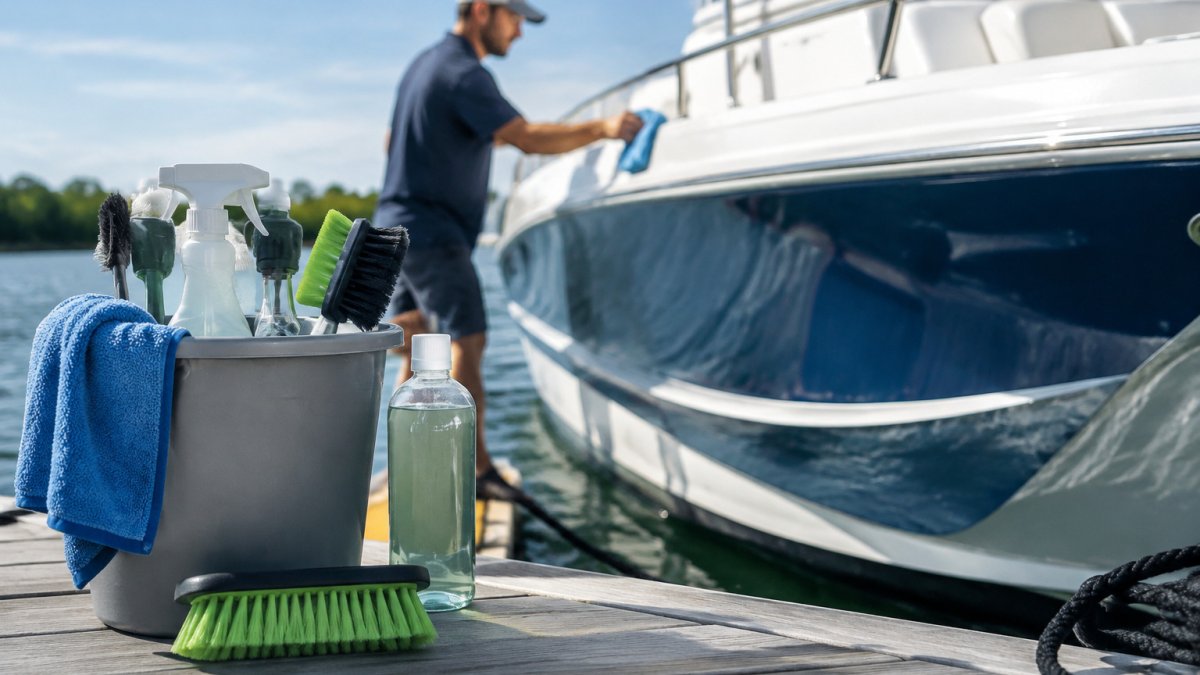
- Dry by hand to stop water spots and mineral stains from setting.
- Apply wax or a polymer sealant to build a UV barrier.
- Inspect the topsides monthly for early signs: dull finish, fading, or light chalking.
- Cover or shade the boat when it sits at the dock between outings.
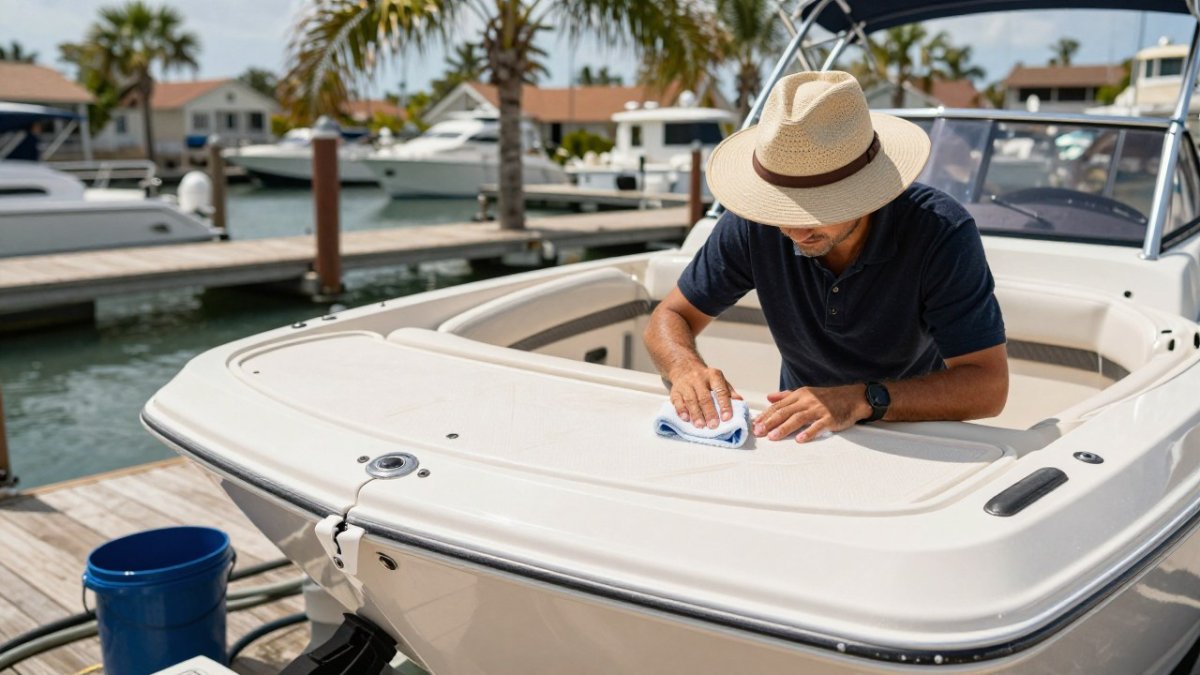
Watch out: buffing a chalky surface without washing it first grinds salt and grit into the gel coat and adds scratches you cannot polish out.
For a deeper look at product choices, see our guide to eco friendly marine cleaning products. When you would rather hand the routine off, contact Kleen All Boats for a same-day quote, or book boat waxing in Port Charlotte for UV and saltwater protection applied at your dock.
Here is the prevention routine at a glance, with each step and how often to do it.
| Step | What to do | Frequency |
|---|---|---|
| Rinse | Freshwater rinse to remove salt residue | After every trip |
| Wash | pH-neutral marine soap | Every two to four weeks in boating season |
| Dry | Dry by hand to stop water spots and mineral stains | After each wash |
| Protect | Apply wax or a polymer sealant for a UV barrier | As part of the routine |
| Inspect | Check topsides for dull finish, fading, light chalking | Monthly |
| Cover | Cover or shade the boat at the dock | Between outings |
How to Remove Oxidation from Fiberglass Boat Surfaces
How to remove oxidation from fiberglass boat surfaces depends on severity. Light oxidation responds to polishing. Heavy, chalky gelcoat needs machine polishing with compound, and the worst cases call for wet sanding before buffing.
Work through these stages:
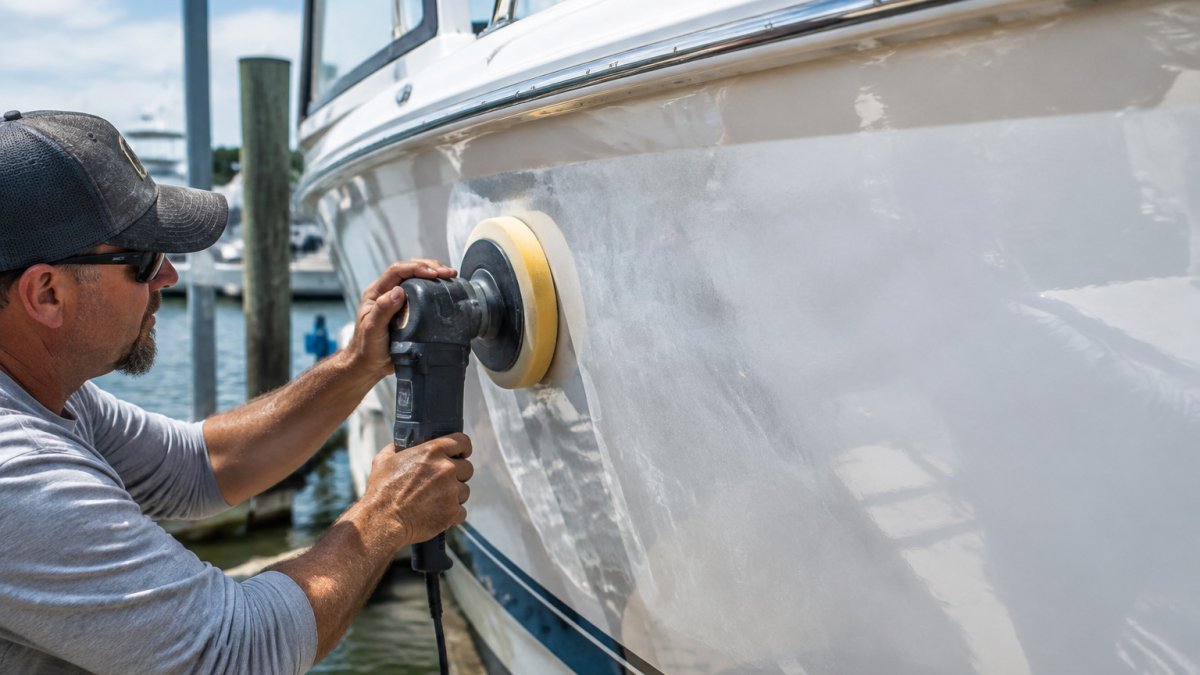
- Light oxidation: a cleaner wax or fine polish, applied by hand or dual-action polisher.
- Moderate oxidation: a heavier compound on a foam pad, then a finishing polish.
- Severe oxidation: wet sanding with 1000 grit, stepping up to 2000 grit, then compounding and polishing to bring back surface gloss.
A common mistake is jumping straight to sandpaper on a surface that only needed polish. Start mild and test a small area first.
For gelcoat too far gone for hand work, our compounding service can cut back heavy oxidation and restore the surface. Oxidation can also leave waterline, rust, and algae stains behind, which our boat stain removal service addresses.
Florida's sun will not wait for a convenient weekend. Every month of unprotected UV exposure makes restoration harder and costs more than prevention ever would. Kleen All Boats brings hand-applied wax, compounding, and eco-friendly detailing straight to your dock, lift, or marina, with custom packages built around your boat and the way you use it. Get started with Kleen All Boats and keep your gel coat protected year-round.
Frequently Asked Questions
How often should I wax a boat in a sunny, salty climate?
In Florida conditions, waxing frequency depends on sun exposure and how the boat is kept, so check the surface regularly during the boating season. A quick water-break test tells you when the UV barrier is fading: if water stops beading on the topsides, it is time to rewax. Boats kept on a lift under shade can stretch the interval, while liveaboards in full sun should stick to the shorter end.
How can I tell whether gelcoat needs polishing or compounding?
Look at how the surface reacts to a light polish on a small test patch. If a fine polish restores gloss, you only need polishing. If the finish stays dull or chalky, the oxidation has gone deeper and a light compound, applied by hand or machine at low speed, is the next step. Heavy chalkiness across large flat areas usually means compounding first, then polishing, then a fresh coat of sealant or wax.
Will rubbing compound remove oxidation, or do I need a professional?
A mild rubbing compound removes light to moderate oxidation from fiberglass, but it also removes a thin layer of gelcoat, so it should be used sparingly and followed by polish and protection. Deep oxidation, scratches, or areas where the gelcoat looks thin are better handled by a professional who can judge how much material is safe to remove. When in doubt, start with the least aggressive product and test a small area first.