 How-to
How to Restore Oxidized Boat Gelcoat Step by Step
Quick Summary
Oxidized boat gelcoat is restored by first judging how deep the damage goes, then starting with the least aggressive method that works. Test a small spot with rubbing compound, then polish, sand only for heavy oxidation, and protect the finish with marine wax.
- Check severity with a white microfiber towel: a faint tan tint means surface oxidation, heavy chalky transfer means deeper damage.
- Test a hidden spot about the size of a sheet of paper before committing to a full restoration.
- Work in sections about two feet square so the product does not dry before you wipe it off.
- Use wet sanding only for heavy oxidation, starting with a fine grit and following with compound and polish.
- Apply marine wax or sealant with UV blockers after the surface is fully polished and dry.
Table of Contents
- How to Tell How Badly Your Gelcoat Is Oxidized
- Tools and Materials You Need to Restore Boat Gelcoat
- Step-by-Step: How to Restore Faded Boat Gelcoat
- Protecting the Restored Finish with Wax and Maintenance
- Booking Professional Gelcoat Restoration in Florida
- Frequently Asked Questions
How to Tell How Badly Your Gelcoat Is Oxidized
Last Updated: November 20, 2026
Oxidized boat gelcoat looks chalky, dull, and faded, and it often feels rough when you run a hand over it. The first job is to judge how deep the damage goes, because that decides which method you can safely use. Start with the least aggressive approach that works and step up only when the surface tells you it needs more.
Gelcoat is the thin, colored resin layer that protects the fiberglass hull. UV light, salt, and repeated washing break down its surface over time, leaving a layer of oxidation that dulls the shine. Light oxidation can often be polished out. Heavy oxidation usually needs more aggressive work.
Read the Surface Before You Touch It
Wash and dry a small area first, then look at it under bright, indirect light. A few signals separate light from heavy oxidation:
- Color transfer on a white cloth. Wipe the surface with a clean white microfiber towel. A faint tan or gray tint means surface oxidation; heavy chalky transfer means the resin is breaking down deeper.
- Feel. A smooth surface with slight haze is light oxidation. A surface that feels like chalk or fine sandpaper is moderate to heavy.
- Water beading. If water still beads, the finish has some protection left. If it sheets and soaks in, the surface is unprotected and likely oxidized.
- Uniformity. Patchy fading, especially on horizontal surfaces like the bow and gunwales, points to sun damage that is worse on top than on the sides.
The Test Spot and Severity Decision Guide
Before you commit to a full restoration of oxidized boat gelcoat, test a small area. Pick a spot below the waterline or in a hidden place, about the size of a sheet of paper. Wash it well, then work a small amount of rubbing compound over it by hand with a foam applicator. Wipe off the residue and check the results after the area dries.
Use this guide to match the damage to a method:
| Severity | What It Looks Like | Best Starting Method |
|---|---|---|
| Light | Slight haze, shine returns with a wipe, faint color on a white cloth | Hand polish or light machine polish with a foam pad |
| Moderate | Chalky film, color looks washed out, compound brings back gloss in the test spot | Marine compound on a wool or cutting foam pad, then polish |
| Heavy | Rough, deeply faded, compound barely helps or leaves a dull haze | Wet sanding with progressive grits, then compound and polish |
| Severe or failing | Crazing, cracks, exposed fiberglass, or gelcoat that is thin from prior sanding | Professional assessment; DIY sanding risks a repair that costs far more than restoration |
Start with the least aggressive method that works. You can always step up, but you cannot undo removed gelcoat. If the test spot improves but dulls again within a few weeks, the oxidation is deeper than the surface and the hull may need a more aggressive cut or a professional evaluation.
Watch out: a test spot that looks better while wet but chalky again after it dries is a sign that you are polishing oxidation rather than removing it. Step up one level of aggressiveness rather than repeating the same pass.
Tools and Materials You Need to Restore Boat Gelcoat
Most restorations need a short list of supplies. Gather them before you start, so you are not stopping halfway through a section.
- A boat-safe wash soap and soft brushes or microfiber mitts
- Oxidation remover or rubbing compound
- Marine polish for the finishing step
- A variable-speed orbital or rotary buffer
- Wool and foam buffing pads, plus a few spares
- Microfiber towels for wiping off residue
- Painter's tape to protect trim and decals
- Wet sandpaper in progressive grits, only if the damage calls for it
- A boat wax or sealant for the final step
Use products made for gelcoat and marine finishes. Household cleaners can dull the surface or leave a film that is hard to remove.
Step-by-Step: How to Restore Faded Boat Gelcoat
Work in the shade and on a surface that is cool to the touch. Hot gelcoat makes compounds dry out too fast and can leave streaks.
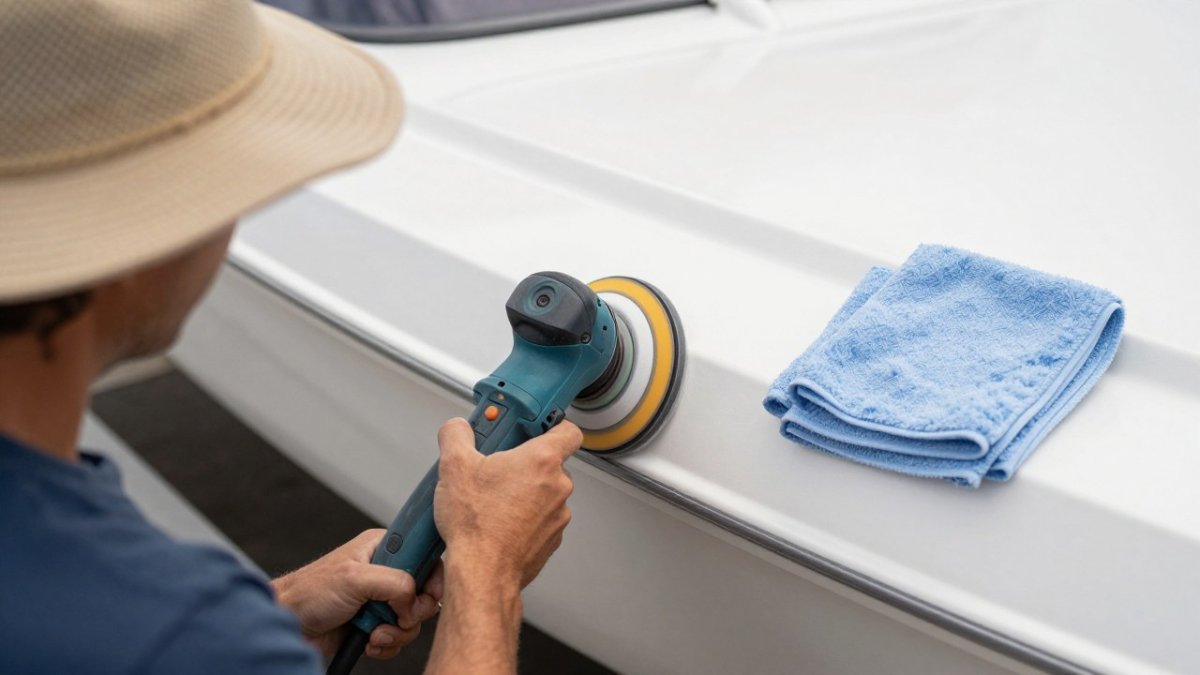
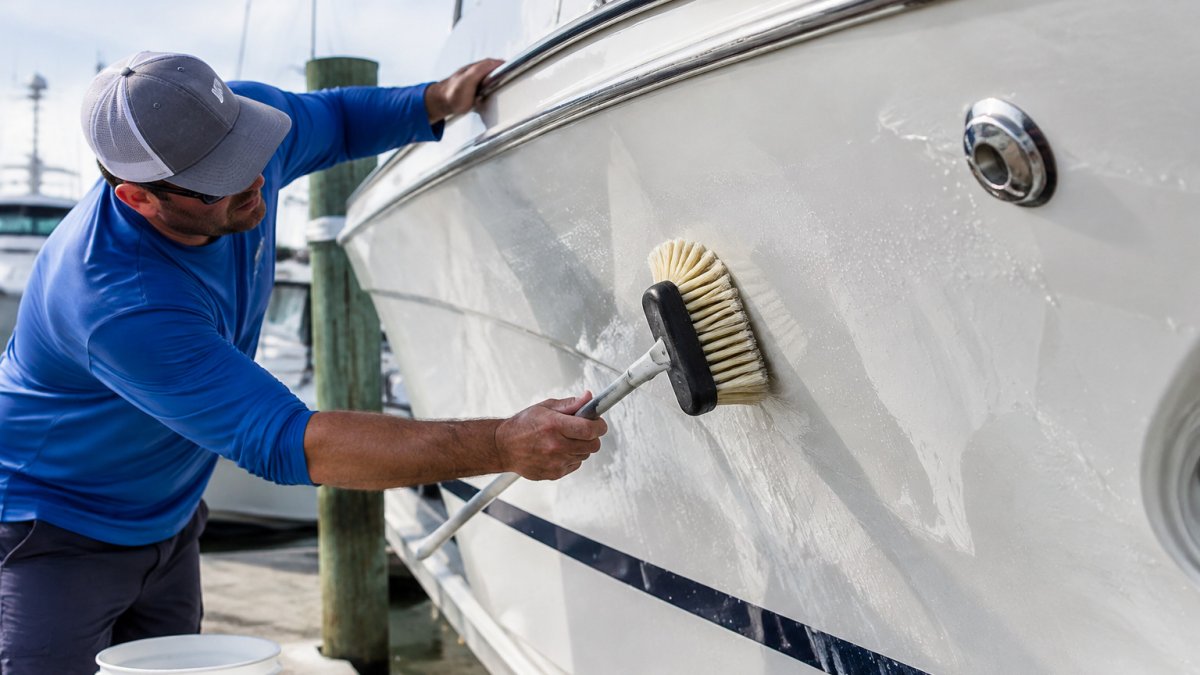
- Wash the hull thoroughly. Remove salt, grime, and loose oxidation with soap and water, then rinse and let it dry.
- Tape off trim and decals. Protect any areas the compound might stain.
- Test a small spot. Confirm your chosen product works before you move on.
- Work in small sections. Keep each section about two feet square so the product does not dry before you wipe it off.
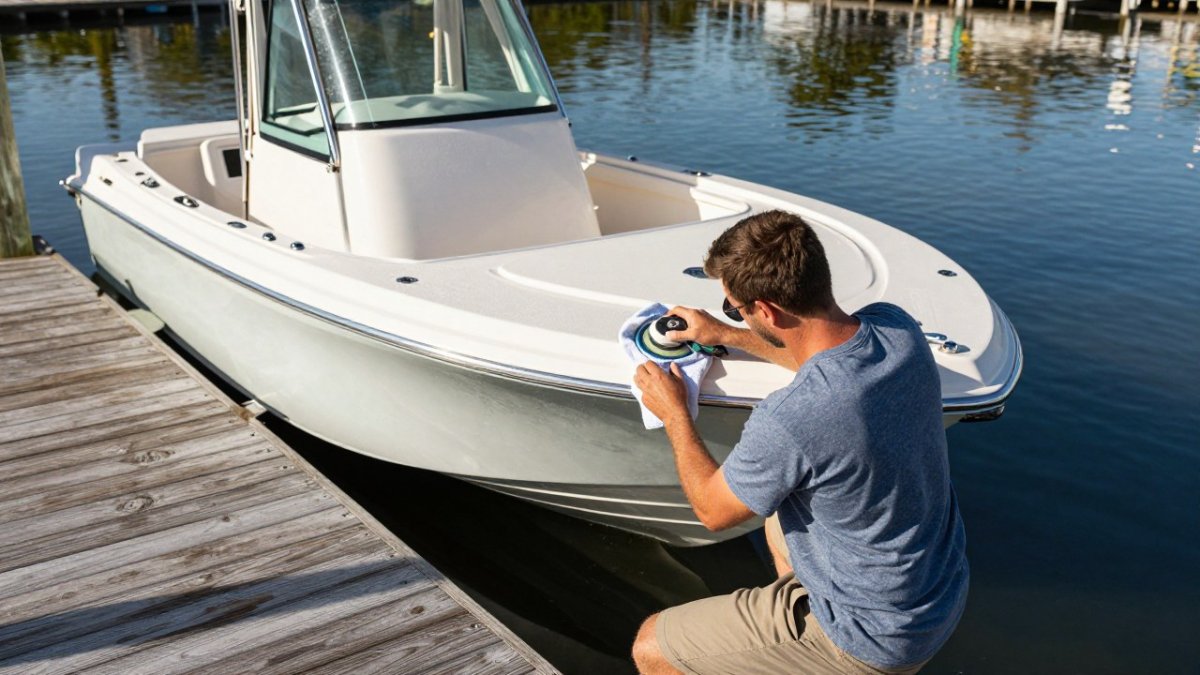
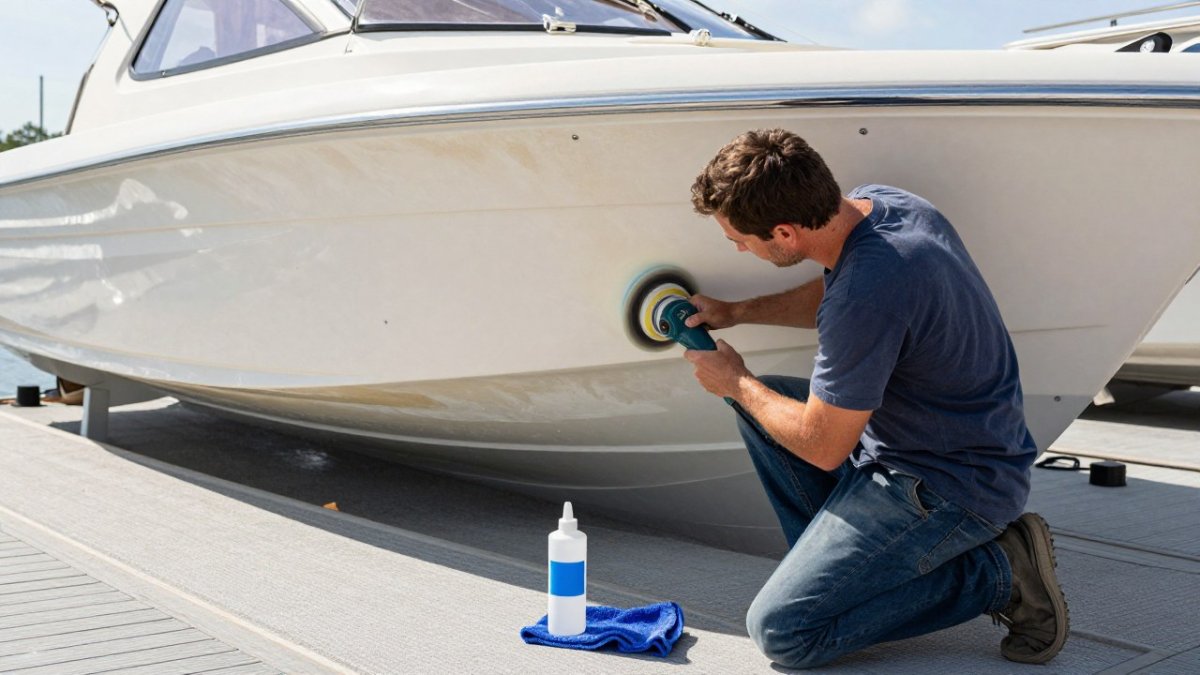
- Apply compound and buff. Use moderate pressure and keep the pad moving. Work the product until the surface looks clear.
- Wipe off residue. Use a clean microfiber towel and check your work under good light.
- Polish the section. Follow with a finishing polish to restore gloss.
- Clean the pads often. Residue buildup reduces cutting power and can scratch the surface.
Watch out: pressing too hard with a machine buffer can burn through gelcoat, especially on edges and corners. Let the pad and the product do the work.
Choosing the Best Boat Polish for Oxidation
For moderate oxidation, choose a compound made for marine gelcoat. For light oxidation, a finishing polish often gives enough gloss on its own. Pick a product that lists gelcoat or fiberglass as an approved surface, and avoid anything that is too harsh for a gentle finish.
Wet Sanding Only When Severity Demands It
Wet sanding removes a thin layer of gelcoat, so use it only for heavy oxidation that compounds cannot fix. Start with a fine grit, keep the sandpaper wet, and sand lightly in straight, even strokes. Follow with compound and polish to restore the shine. Do not sand through the gelcoat, because that exposes the fiberglass and the repair becomes much harder.
Protecting the Restored Finish with Wax and Maintenance
A restored finish needs protection. Apply a marine wax or sealant with UV blockers after the surface is fully polished and dry. Reapply it on a regular schedule, especially in strong sun and salt air.
Good habits make a big difference:
- Rinse the hull with fresh water after each trip
- Wash with a gentle, boat-safe soap
- Keep the boat covered when it is not in use, if possible
- Check the wax layer every few months and reapply as needed
Booking Professional Gelcoat Restoration in Florida
Some boat owners prefer to hand the work to a professional, especially for heavy oxidation or a large boat. For current pricing or a quote, call (941) 356-7769 or visit the website.
Frequently Asked Questions
How do you restore oxidized boat gelcoat?
Start by washing the hull to remove salt and grime, then test a small area to see how the oxidation responds. Work in small sections of about two feet square. Apply a marine rubbing compound with a dual-action polisher or by hand, wiping away residue as you go. Follow with a finishing polish to restore gloss, then apply a marine wax to protect the surface. Moderate oxidation usually responds to compounding alone, while heavy chalking may first need wet sanding with progressively finer grits.
Can you restore faded boat gelcoat without sanding?
In many cases, yes. Mild to moderate oxidation often responds to a marine oxidation remover or rubbing compound followed by a polish, with no sanding at all. Sanding is reserved for heavy oxidation where the surface is chalky and compound no longer lifts the haze. Always try the least aggressive method first, because gelcoat is a thin layer and each sanding pass removes material that cannot be replaced.
What is the best boat polish for oxidation?
The best boat polish for oxidation is one formulated for marine gelcoat and paired with the right pad. A cutting compound handles heavier oxidation, while a finishing polish refines the surface and adds gloss. Choose products labeled for fiberglass or gelcoat, and test on a small area first. Pricing varies by brand, size, and quantity, so check current options and availability with your supplier or with Kleen All Boats directly.
How do you keep boat gelcoat from oxidizing again?
Keep oxidation from returning by washing the boat regularly to remove salt, applying a quality marine wax every few months, and storing the vessel out of direct sun when possible. Waxing creates a sacrificial layer that absorbs UV exposure, which is the main driver of oxidation in Florida conditions. Regular cleaning and waxing preserve gloss and make future restoration faster and less aggressive.