 comparison
Dockside vs Shop Boat Detailing: Which Fits Your Boat
Last Updated: November 12, 2026
Quick Summary
Dockside boat detailing happens at your slip, lift, or marina, while shop boat detailing happens after you haul the boat to a facility. Choose dockside for routine wash, wax, interior work, and light oxidation, and choose shop work for heavy hull restoration or paint correction.
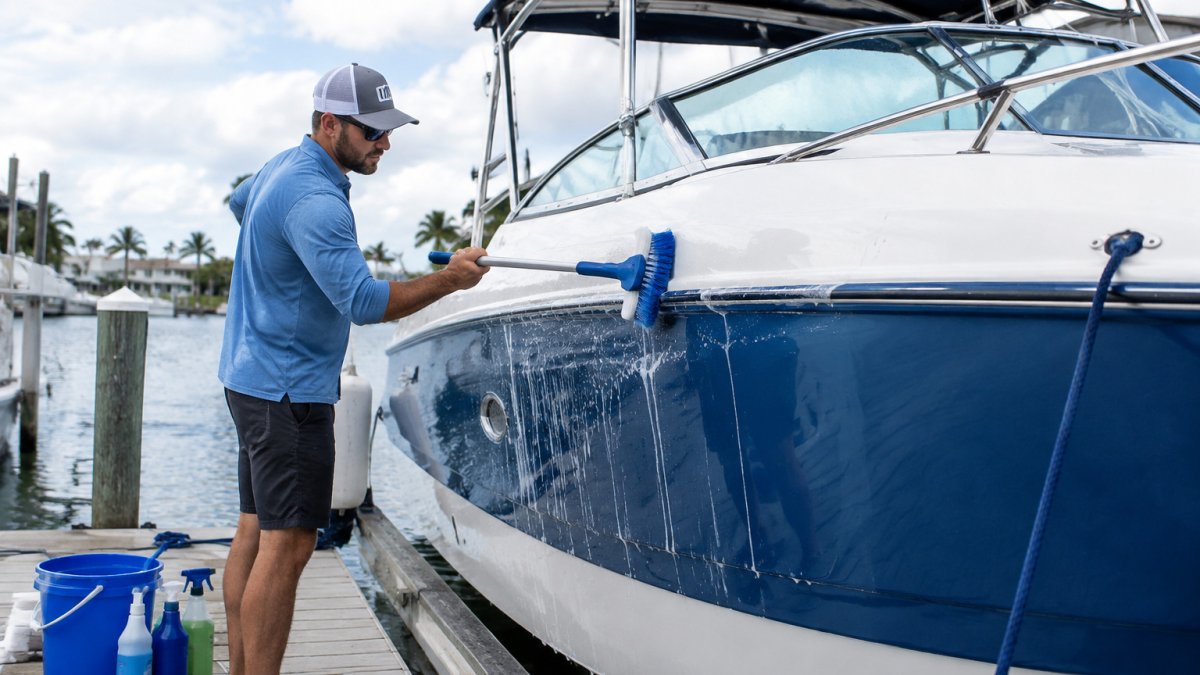
- Dockside service avoids haul-out fees and travel time, but wind, sun, and dock traffic affect the work.
- Wash-and-wax service runs roughly $15 to $30 per foot, with oxidation removal reaching $75 or more per foot.
- A rotary buffer pulls roughly 10 to 15 amps, so two buffers plus lights can trip a 15-amp dock outlet.
- Many marinas prohibit wash runoff entering the water, so reputable mobile crews carry containment equipment and waterless options.
- Ask any detailing contractor for proof of insurance and get the post-visit flaw policy in writing.
Table of Contents
- Dockside vs Shop Boat Detailing: The Quick Comparison
- Boat Detailing Cost Per Foot: What Drives the Number
- Dockside Logistical Constraints: Water, Power, and Access
- Boat Detailing Preparation Checklist Before Either Appointment
- Boat Compounding and Polishing: Can It Happen at the Dock?
- Insurance, Liability, and Quality Control Benchmarks
- Boat Detailing for Resale Value: Which Model Protects It Better
- Book a Dockside Detail with Kleen All Boats
- Frequently Asked Questions
Dockside vs Shop Boat Detailing: The Quick Comparison
Dockside boat detailing happens at your slip, lift, or marina; shop boat detailing happens after you haul the boat to a facility. The decision comes down to convenience versus control over the work environment.
Dockside wins on scheduling, avoiding haul-out fees, and keeping your boat in the water. Shop work wins when a job needs heavy compounding under controlled light, or when the hull must come out anyway for mechanical service.
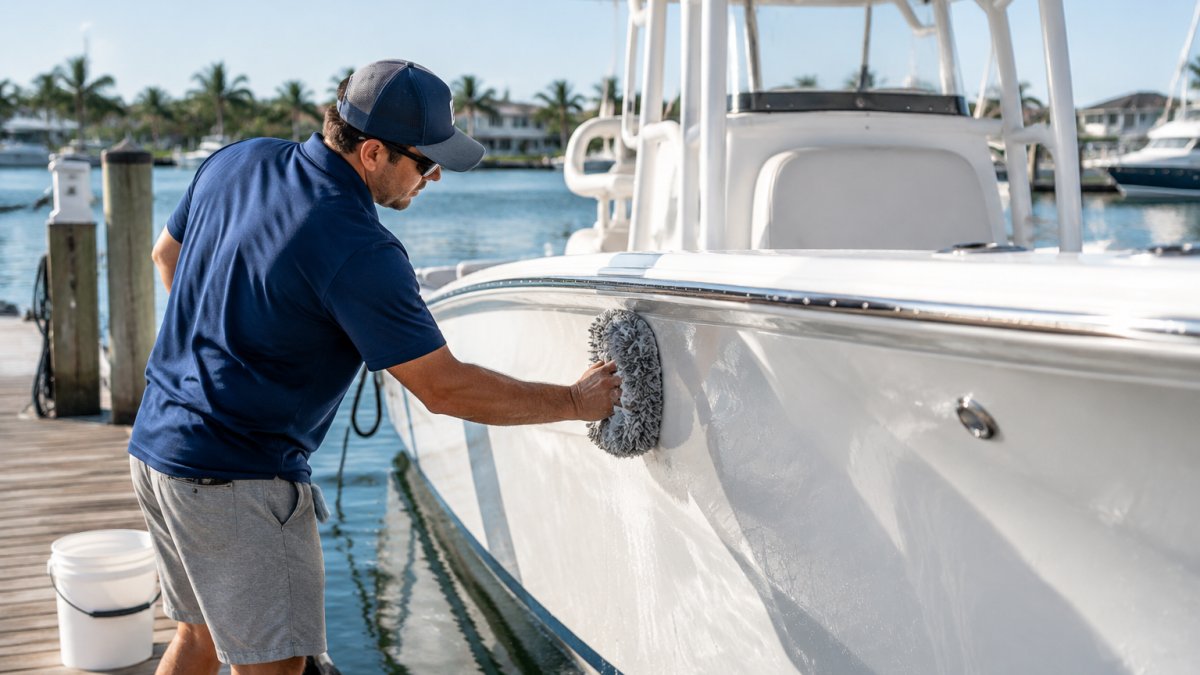
Dockside vs Shop Detailing at a Glance
The table below summarizes how each model handles the key factors.
| Factor | Dockside Detailing | Shop Detailing |
|---|---|---|
| Where work happens | Your slip, lift, or marina | Hauled to a facility |
| Haul-out required | No | Usually yes |
| Travel time for you | None | Round trip plus wait |
| Power and water | Supplied on site or by crew | Fixed shop utilities |
| Best for | Routine wash, wax, interior, light oxidation | Heavy hull restoration, paint correction |
| Scheduling flexibility | High, weather dependent | Tied to shop calendar |
For a closer look at what an appointment actually involves, see our guide to mobile boat detailing in Port Charlotte.
What Each Model Does Well, and Where It Falls Short
Dockside service removes the biggest hidden cost of detailing: moving the boat. No haul-out, no travel, no waiting for a yard slot. The limitation is the environment, wind, sun, and dock traffic all affect the work, and a crew cannot control any of them.
Best for dockside: routine maintenance, seasonal service, liveaboards that stay in the water.
Boat Detailing Cost Per Foot: What Drives the Number
Boat detailing cost per foot is the industry's standard quoting method, and the range is wide because the work behind each foot varies enormously. A maintenance wash and a full oxidation removal are different jobs wearing the same label.
Published guidance illustrates the spread. One detailing blog reports wash-and-wax service running roughly $15 to $30 per foot, with oxidation removal reaching $75 or more per foot (BoatZon boat detailing cost guide). Another source shows three quotes for the same 23-foot center console: $150, $400, and $800 (Mobile Marina wash versus detail comparison). Same boat, same length, wildly different scopes.
That gap is the most useful thing to understand about per-foot pricing. Length sets the baseline; condition, service level, and access set the rest.
Pricing depends on your boat's size, condition, and the service scope. For current prices or a quote, contact Kleen All Boats directly.
Dockside Logistical Constraints: Water, Power, and Access
Water, power, and dock access are the three constraints that decide whether a dockside job runs smoothly.
Water. Marina slips usually have a hose bib within reach, but private lifts and canal-front docks often do not, and some marinas meter or restrict water use during drought conditions. Ask whether the quote assumes on-site water or a self-supplied tank, because it changes both the method and the time on site.
Power. A rotary buffer pulls roughly 10 to 15 amps, and two buffers plus lights and a vacuum can exceed what a single 15-amp dock outlet will carry without tripping a breaker.
Access. A boat wedged between pilings with no walkway slows every step, and a tight fairway limits where equipment can sit. A boat on a lift that must be lowered and raised for hull access adds a step to every section. A slip with a finger pier on one side only means the crew works the far side from the boat itself, which is slower and less stable.
The regulatory layer most owners never hear about. Dockside work happens inside someone else's rules. Many marinas prohibit washing that lets soap, degreaser, or hull-cleaning runoff enter the water, and some require a containment mat or a waterless product line. State and local stormwater rules can treat wash water as an illicit discharge even when the soap is biodegradable.
What to tell the crew when you book. Your setup changes the plan and sometimes the price. Tell them whether water and power are available at the slip, whether the boat sits on a lift or in the water, how wide the finger pier is, and whether the marina has wash restrictions. A crew that asks these questions before quoting is planning the job; one that does not is guessing.
Boat Detailing Preparation Checklist Before Either Appointment
Preparation is where owners save the most time and money, whichever model they choose. Run this checklist before the crew arrives.
- Remove personal items, electronics, and loose gear from cabin and cockpit
- Empty coolers, lockers, and storage compartments
- Clear the dock or lift area so the crew has working room
- Confirm water and power access, or tell the crew to bring their own
- Note problem areas: stains, oxidation, mold, teak condition
- Share the boat's length and beam for accurate scheduling
- Check the weather forecast for the appointment window
- For shop work, confirm the haul-out time and yard location
A five-minute walkaround with the crew lead at the start beats a phone call afterward. Point out the scratches you already know about, and the ones you are worried about.
Boat Compounding and Polishing: Can It Happen at the Dock?
Boat compounding and polishing can be done dockside, and for moderate oxidation it works well. Compounding cuts back the chalky, oxidized layer of gel coat; polishing restores gloss after the cut. Both steps need steady power, shade where possible, and a crew that works in sections.
The limits are real. Heavy oxidation on an older hull, deep scratches, and any job that needs wet sanding belong in a controlled environment where lighting is consistent and dust is contained. A rotary buffer run in direct sun on hot gel coat can dry the compound too fast and leave haze.
Kleen All Boats offers compounding and polishing, and the verified facts describe hand-applied techniques and eco-friendly products. For the full scope of what mobile compounding covers, see our full compounding services in Port Charlotte.
Insurance, Liability, and Quality Control Benchmarks
Insurance and liability are worth checking when hiring any contractor. The two models carry risk differently, and understanding why tells you what to ask before work begins.
What the coverage actually is. Ask any detailing contractor for proof of insurance. A certificate of insurance can confirm a policy exists, and an additional-insured endorsement can name you or your marina for the appointment date.
Where the risk sits differently. In a shop, the boat is on the facility's premises and usually under the facility's care, custody, and control, so the shop's liability extends to the boat during haul-out, storage, and the work itself. Dockside, the boat never leaves your control, but the crew is working on a dock or lift you may not own. If the marina owns the dock, damage to the dock or a neighboring boat can pull the marina into the claim, and the contractor's policy is what responds.
The uninsured-cost scenario. A crew working around gel coat, stainless, and electronics can cause expensive damage: a buffer burn through gel coat, a cracked hatch, a soaked helm panel. Uninsured work leaves you holding the bill, and homeowner policies often exclude business activity on the property.
Quality control benchmarks for each model. A shop can inspect under fixed lighting before you collect the boat, and the handoff is a natural checkpoint. A mobile crew must build checkpoints into the visit: a walkaround before, section-by-section inspection during, and a final review with you at the dock. Inspect the same things either way. Run a hand over the hull below the rub rail for leftover compound residue.
What to ask before you book. Ask what happens if you find a flaw after the crew leaves, and get the answer in writing.
Kleen All Boats is family owned and operated, and you can read more about our history and team before you book.
Boat Detailing for Resale Value: Which Model Protects It Better
Boat detailing for resale value favors whichever model gets done consistently, not whichever costs more. A surveyor or buyer sees the same things either way: chalky gel coat, stained waterline, mildewed vinyl, dull stainless. Regular care prevents all of it; neglect accelerates all of it.
Dockside service removes the haul-out barrier, which makes it easier for owners to keep a regular schedule. Regular care helps protect against UV damage and salt corrosion, which can show at resale.
Our advice: build a maintenance schedule around your use. Seasonal residents who leave a boat in the slip for months benefit most from recurring dockside visits, because the boat keeps getting care while they are away.
Book a Dockside Detail with Kleen All Boats
The dockside vs shop boat detailing choice is simpler than it looks. If your boat needs routine care, light oxidation correction, or interior work, dockside saves you a haul-out and a lost day. If it needs heavy restoration, a shop bay earns its cost.
Kleen All Boats has been family owned and operated since 2004, using eco-friendly, hand-applied services to protect gel coat from sun and salt and to help protect resale value.
Get started with Kleen All Boats to keep your boat protected at your dock, lift, or marina. Browse our mobile boat detailing service in Port Charlotte to choose a package, or contact us for a quote on your boat.
Your boat is sitting in the Florida sun right now, collecting the oxidation and salt film that costs the most to reverse later. The fix is a scheduled detail at your own dock, handled by a crew that knows what salt air does to gel coat. Kleen All Boats offers mobile service at your slip or lift, eco-friendly products, and hand-applied wax and detailing tailored to your boat. Get started with Kleen All Boats and protect your gel coat before the damage sets in.
Frequently Asked Questions
Is dockside boat detailing more expensive than shop detailing?
Not automatically. Dockside pricing often lands close to shop rates because the detailer saves on facility overhead, though travel time to your slip can add a small premium. What moves the number most is the service scope, not the location. Ask for an itemized quote so you can compare the same scope across both options.
Can a detailer compound and polish a boat at the dock?
Compounding and polishing can be done at the dock for moderate oxidation. Ask the detailer how they handle water supply and how they contain polish residue so it does not stain the dock or enter the water.
What should I ask before booking a boat detailer?
Ask for proof of insurance covering work performed at your slip, a written scope of what is included, and the products they plan to use on gel coat, vinyl, and teak. Confirm whether the quote covers the hull only or the full detail. Also ask about turnaround time and how weather delays are handled.
Does professional boat detailing help protect resale value?
Consistent detailing does more for resale than a single deep clean before listing. Regular waxing and surface protection can help slow UV damage and saltwater corrosion, which are common causes of faded gel coat and chalky topsides. A buyer inspecting a boat with intact gel coat and clean vinyl sees a vessel that was maintained. Keep records of recurring service and you give a surveyor and buyer documented proof of care.